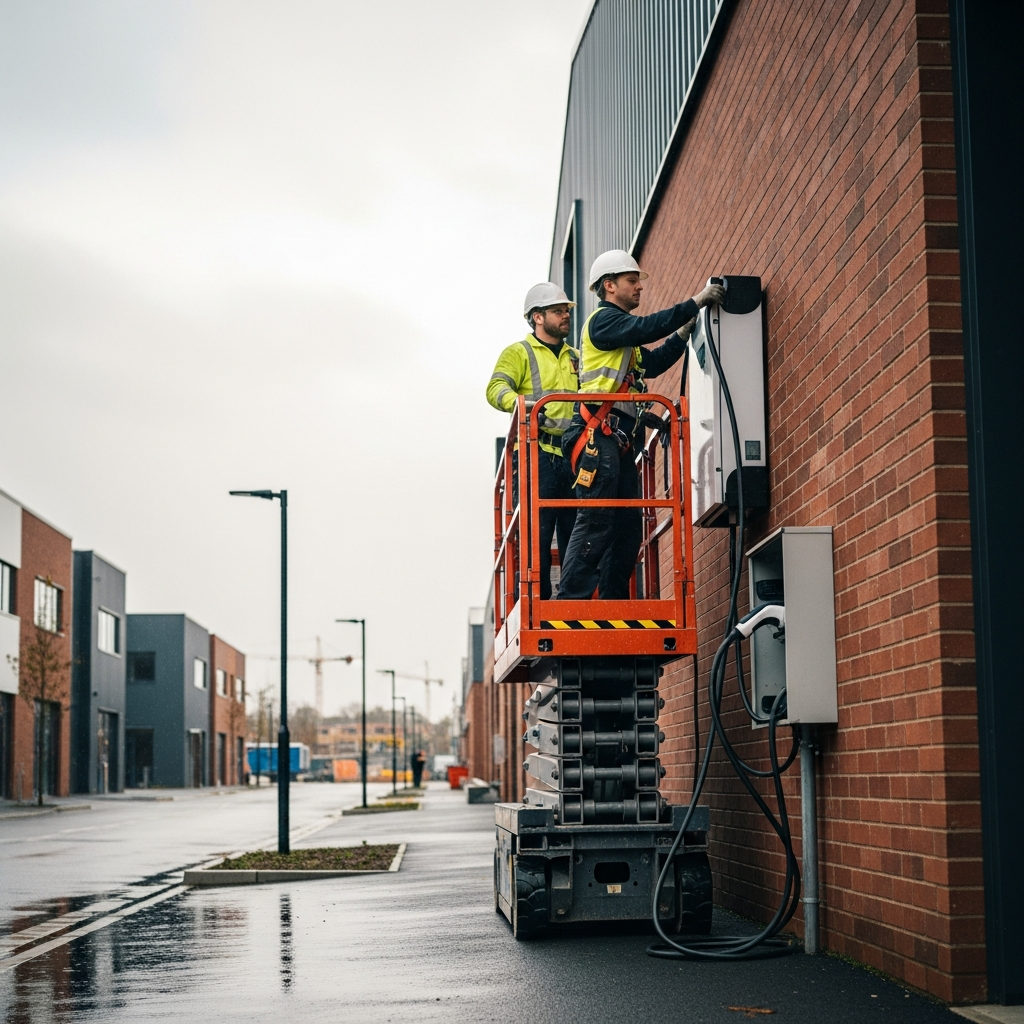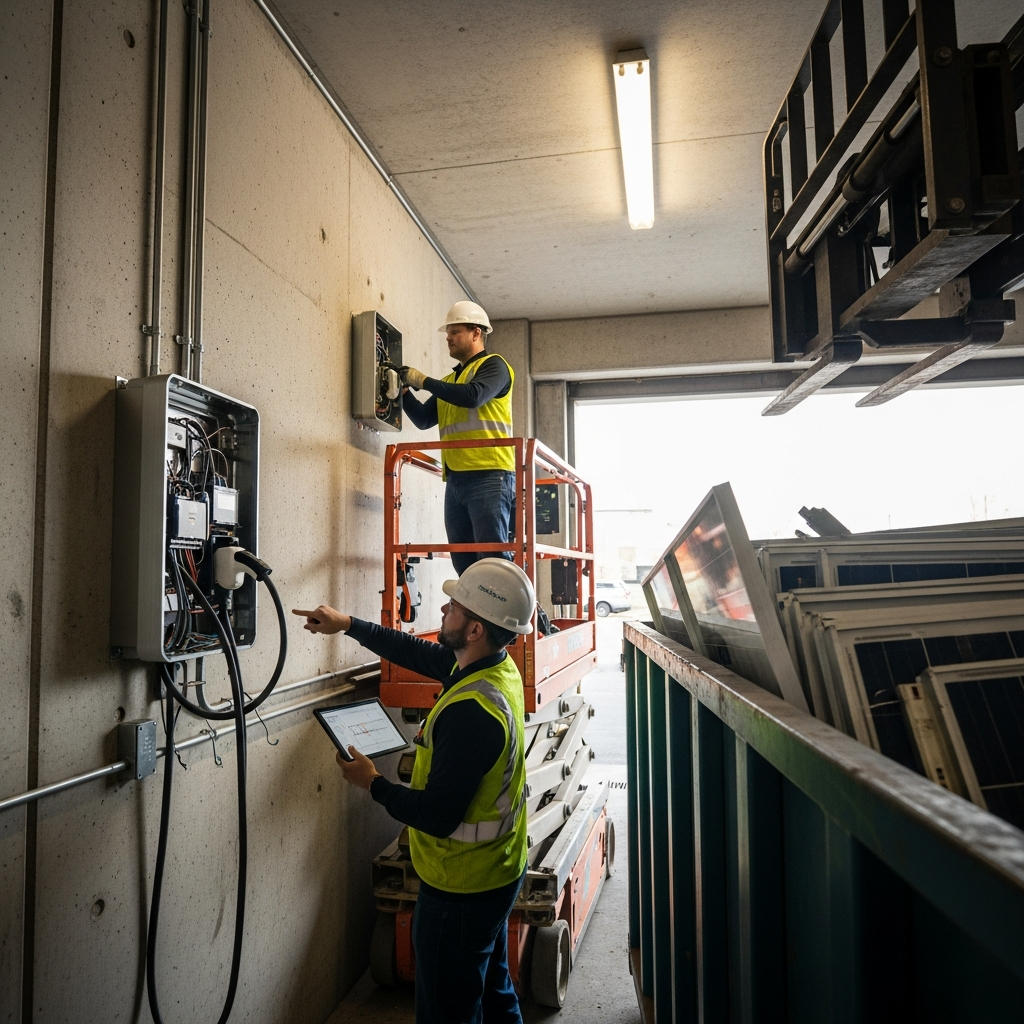
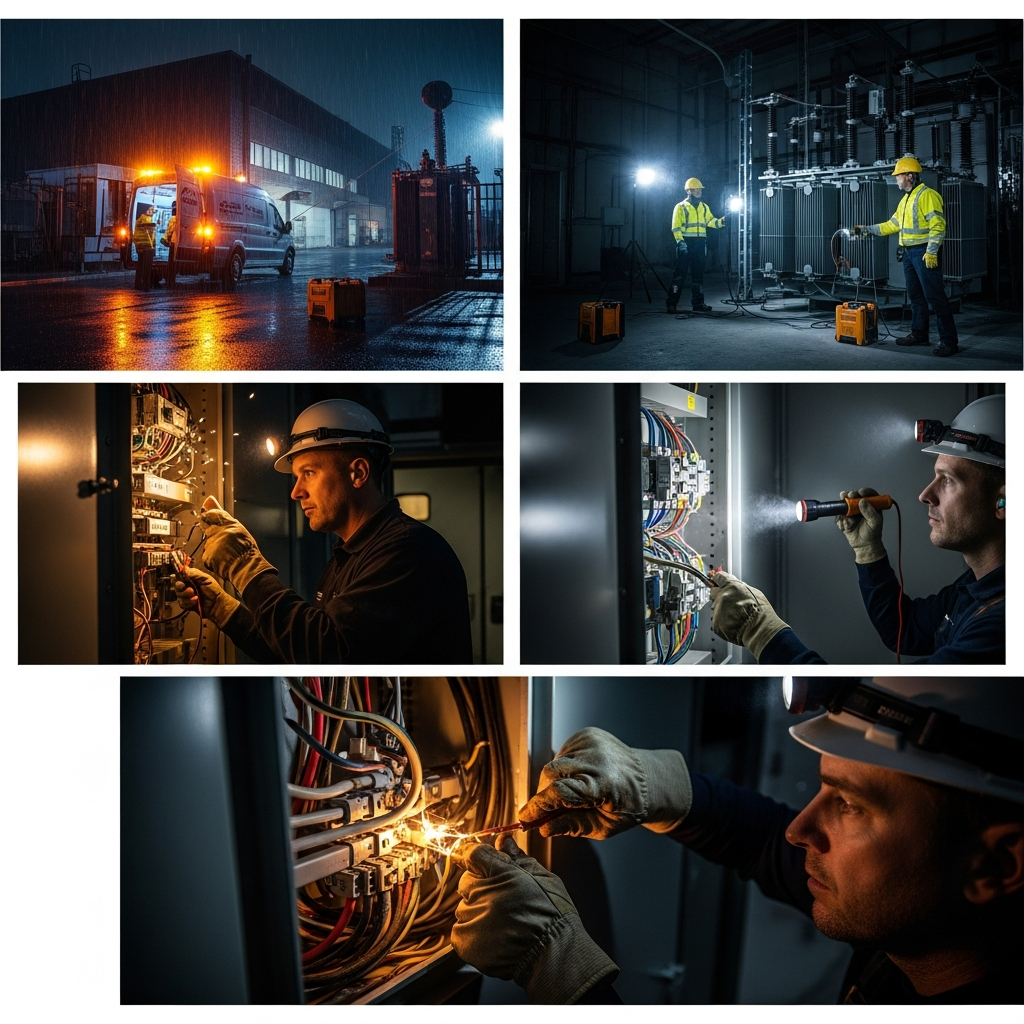
Gaza’s blackout crisis puts generator-ready infrastructure at the center of Commercial Industrial Electrical Installation
When a commercial building loses power, it does not fail neatly. Walk-in coolers start climbing. Card readers stop letting people in. Registers freeze with customers standing there. Somebody smells heat at a panel and suddenly the property manager is calling at 10:40 at night. That is why 24/7 commercial emergency electrical repair cannot just mean showing up with basic tools. The gear has to be reachable, labeled enough to work on, and safe enough to put hands on when things are already going sideways.
Most generator complaints we see are not really about the generator. Not at first. The trouble is usually in the building wiring. Transfer equipment installed wrong or never maintained. Panels already loaded past what makes sense. Breakers swapped over the years with no real load review. Then a storm hits, temporary power gets tied in, and the weak parts announce themselves. Reuters recently reported on Gaza’s damaged grid pushing people toward generators and private charging points just to keep phones and basic power available. Different scale, obviously. Same electrical truth though. Unstable utility power abuses everything downstream.
In commercial work, that abuse shows up as tripped mains, cooked conductors, failed contactors, flickering equipment, or machines that refuse to restart clean after an outage. A restaurant is not the same as a warehouse. A medical office is not the same as a retail space. Loads cycle differently. Kitchens hit hard. Refrigeration does not wait. Steel City Electric dealt with that kind of practical load planning on the Insomnia Cookies buildout in Florida, where the retail side and kitchen side both had to hold up under actual daily use.
Good emergency work needs access and a plan. Crews may have to trace feeders, isolate bad circuits, test panels under load, repair damaged gear, or remove unsafe temporary connections someone made in a hurry. Sometimes the repair is simple. Sometimes repeated failures point toward commercial panel upgrades, especially when the service was never built for the tenant mix now sitting inside the building.
A generator sitting outside does not make a site generator-ready. The electrical system still has to accept backup power correctly, drop noncritical load when needed, and survive the utility coming back on. If a property is already showing heat, nuisance trips, dimming lights, or outage problems, waiting for the next overnight call is a bad plan. Steel City Electric handles urgent commercial electrical issues and can sort out whether the fix is repair work, added capacity, or a deeper service problem tied to commercial electrical services.