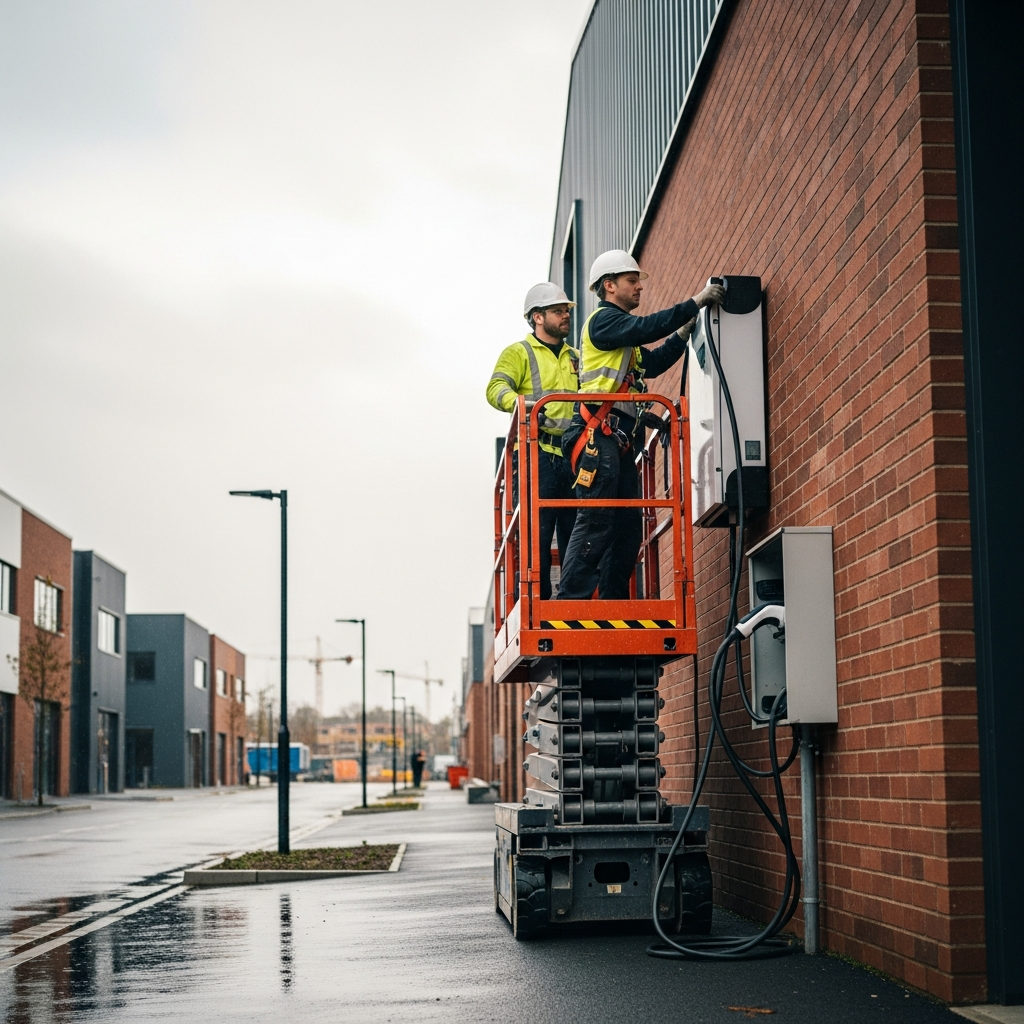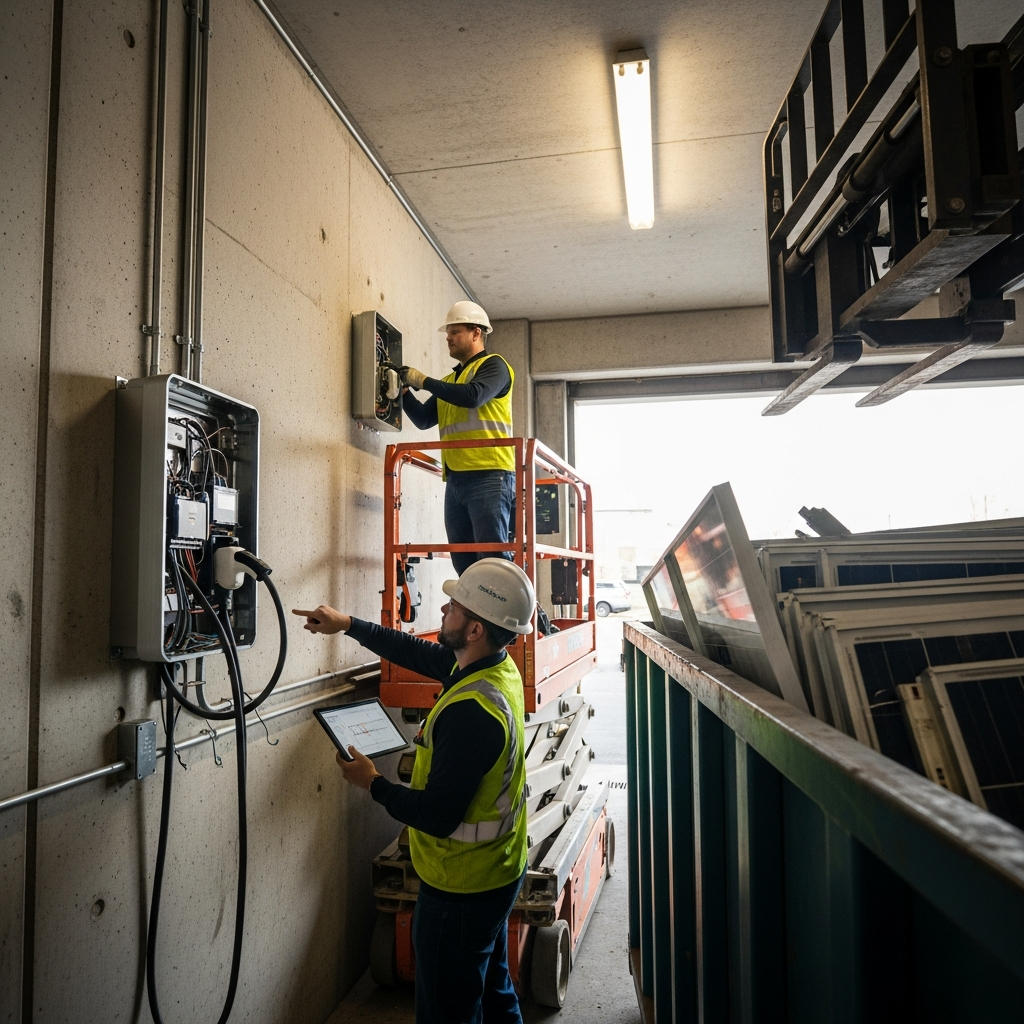

EV charging on a commercial job is not just hanging a station and calling it done. Anybody who has opened the gear on an older site knows that. The panel schedule may be wrong. The spare breaker space may not really be spare. The conduit path on the print may run straight through something that got built five years ago. Before chargers go in, somebody has to look at service size, feeder capacity, grounding, disconnect location, and how the equipment will be serviced when the lot is full. One employee charger is simple enough. Chargers tied to fleet drivers, customers, tenants, or deliveries are a lot less forgiving.
That is where commercial EV charger installation needs to be treated like real site infrastructure. Can the existing service carry it? Will the chargers run hard every day or just a few times a week? If one unit trips, does it take anything else with it? Can an electrician isolate the problem without killing the whole row? These are not office questions. They decide whether the property keeps moving or starts backing up.
Reuters recently reported that more than 100 Baidu Apollo Go robotaxis stopped in traffic around Wuhan, sitting on roads and elevated highways instead of clearing themselves out. That was a software and fleet control failure, not a charger failure. Still, the lesson lands close enough. Systems that depend on electric vehicles need a way to fail without taking everything down at once.
On actual jobs, the trouble is usually boring. A panel already carrying too much load. Feeders sized for the first phase only. Breakers with no clean labeling. Chargers placed where service access is miserable. A lot gets wired like the owner will never expand. Six months later they want more ports, faster charging, and longer hours. Now the electrical room, not the parking lot, is what stops the project.
Steel City Electric has dealt with that kind of load planning before, including the Insomnia Cookies tenant buildout in Florida, where the retail equipment had to match what the space could actually support. Same field problem, different equipment. The installed work has to fit the business, not the other way around.
EV charging should be planned with normal commercial electrical services, not tacked on at the end. Routing, trenching, slab cuts, disconnects, utility coordination, lighting, signs, bollards, and room for future circuits all matter. Keeping the site open during the work matters too. Nobody cares how clean the plan looked if tenants are blocked in or drivers find dead chargers.
The best install is not always the biggest one. Sometimes it is the one with a cleaner pipe run, a panel that still has room to breathe, and a layout that lets service work happen without shutting down every charger on site. Steel City Electric can walk the property, look at the real electrical conditions, and build the charging work around how the place actually operates.