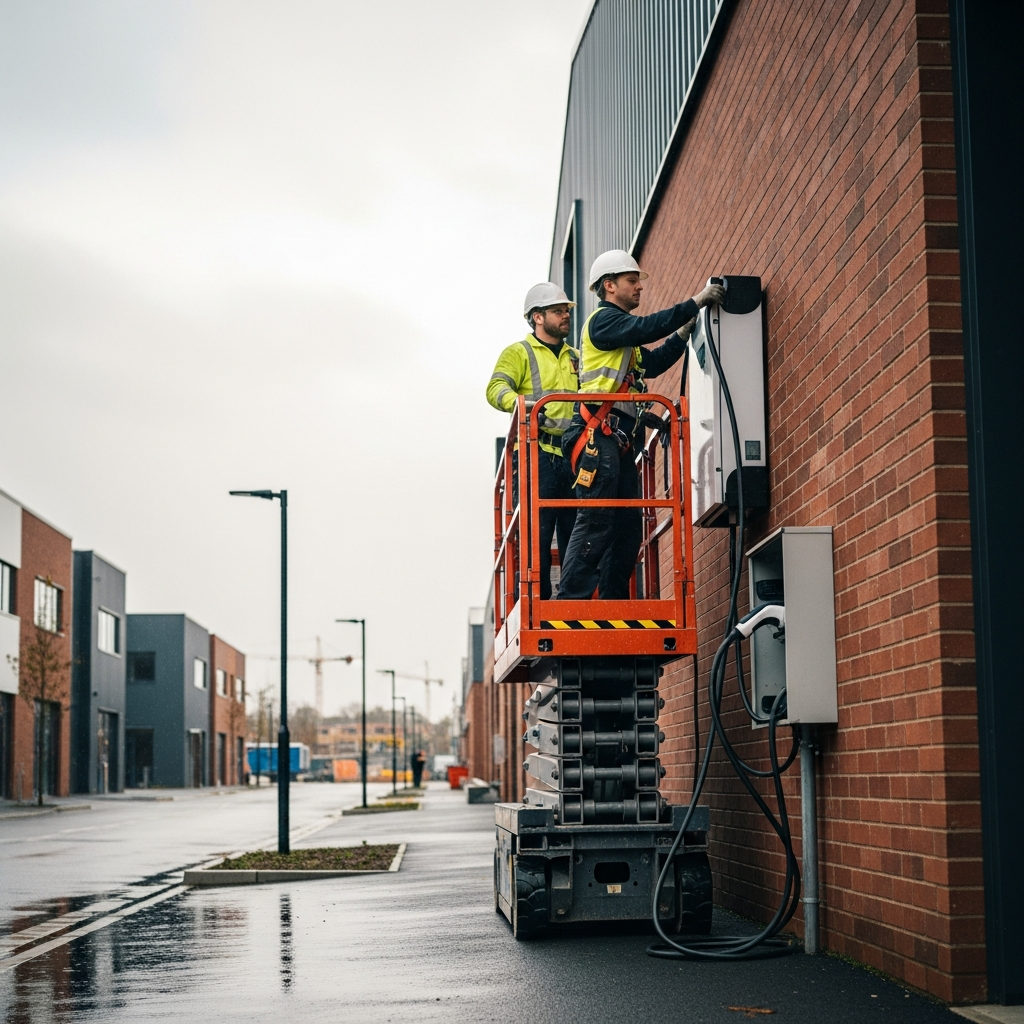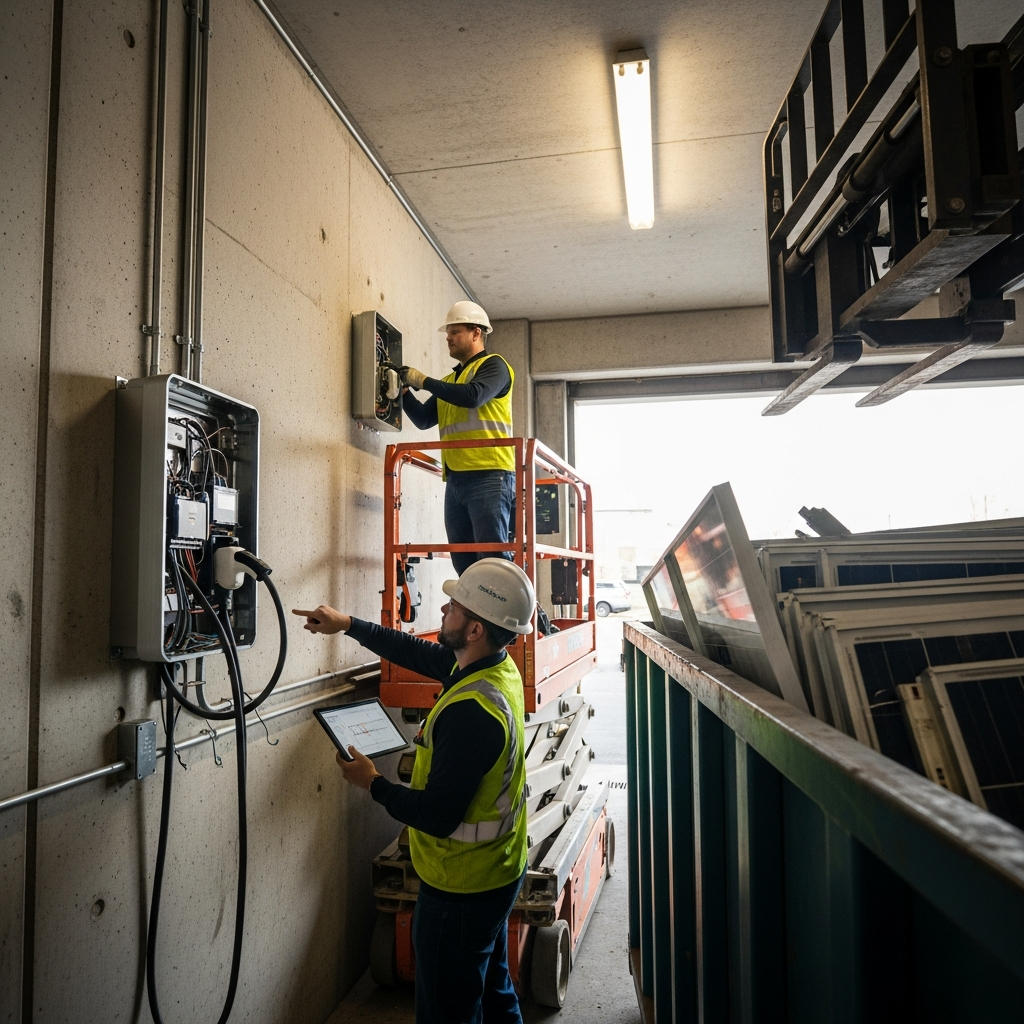
On a commercial job, the charger is rarely the thing that causes the headache. It is the gear feeding it. We see it all the time. Panel schedule says there is room, then you open the can and half the spare spaces are not really usable. Service is already carrying HVAC, coolers, kitchen equipment, site lighting, and whatever got added during the last tenant buildout. Parking looks simple until the charger stalls are 180 feet from the electrical room. That is why Commercial EV Charger Installation needs to be looked at as load work first. The pedestal or wall unit comes after that.
The same kind of strain is showing up overseas, just from a different direction. Reuters recently reported that India is dealing with a worse cooking gas shortage after fuel supply trouble connected to conflict near the Strait of Hormuz. More people are turning to electric cooking because they need another option. Different equipment, same basic problem. When fuel gets unreliable, the electrical system becomes the backup whether it was built for it or not. Nobody waits around for a clean five-year plan when the normal supply quits working.
Florida properties can hit that point with vehicles. A shopping center brings in delivery vans. A hotel decides guests expect chargers. A contractor yard starts cycling electric service trucks. Sounds simple in a meeting. Out in the field, it may mean a utility call, transformer check, service upgrade, trenching through hardscape, night shutdowns, bollards, concrete work, or load management so the whole place does not get boxed in. Steel City Electric has dealt with that kind of real load pressure on tenant projects like Insomnia Cookies in Florida, where the service had to match the equipment actually running in the space.
Before ordering chargers, somebody needs to look at the existing electrical gear with a meter and a set of drawings, if the drawings are even current. Available amperage. Breaker space. Grounding. Voltage drop. Panel condition. Distance from service to parking. Emergency access. Utility requirements. All of it matters. On sites with big HVAC loads, refrigeration, compressors, food service equipment, or older panels, EV charging can be the load that finally pushes the service past what is reasonable. A contractor used to commercial electrical services will usually catch those problems before the chargers are sitting in the box waiting for power.
If your property is looking at EV charging, plan past the first station. Leave a path for the next two, or the next ten, if that is where the site is headed. Steel City Electric can walk the service, check the existing capacity, review usable installation routes, and build a plan around the actual building instead of a clean sketch on paper. Chargers are the visible part. The service, panels, conduit, and utility coordination are what decide whether the setup works.