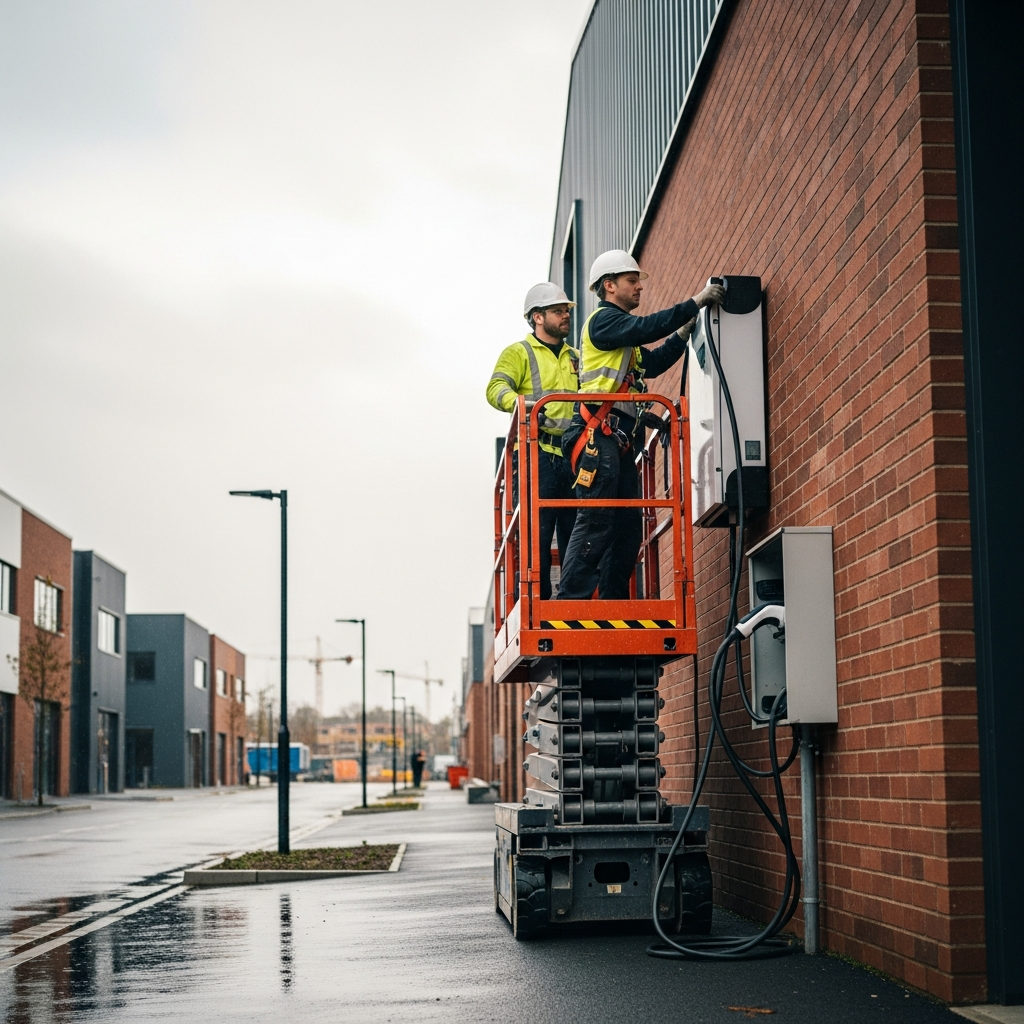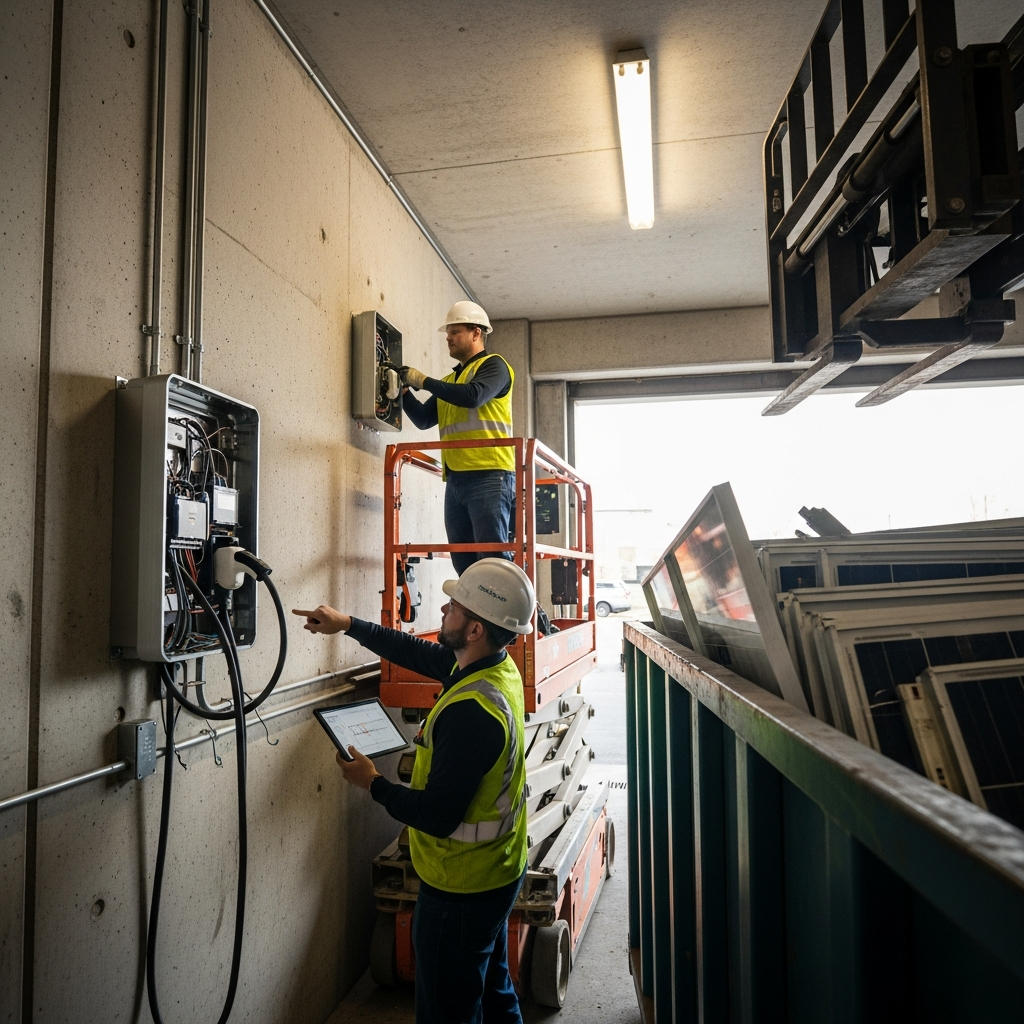
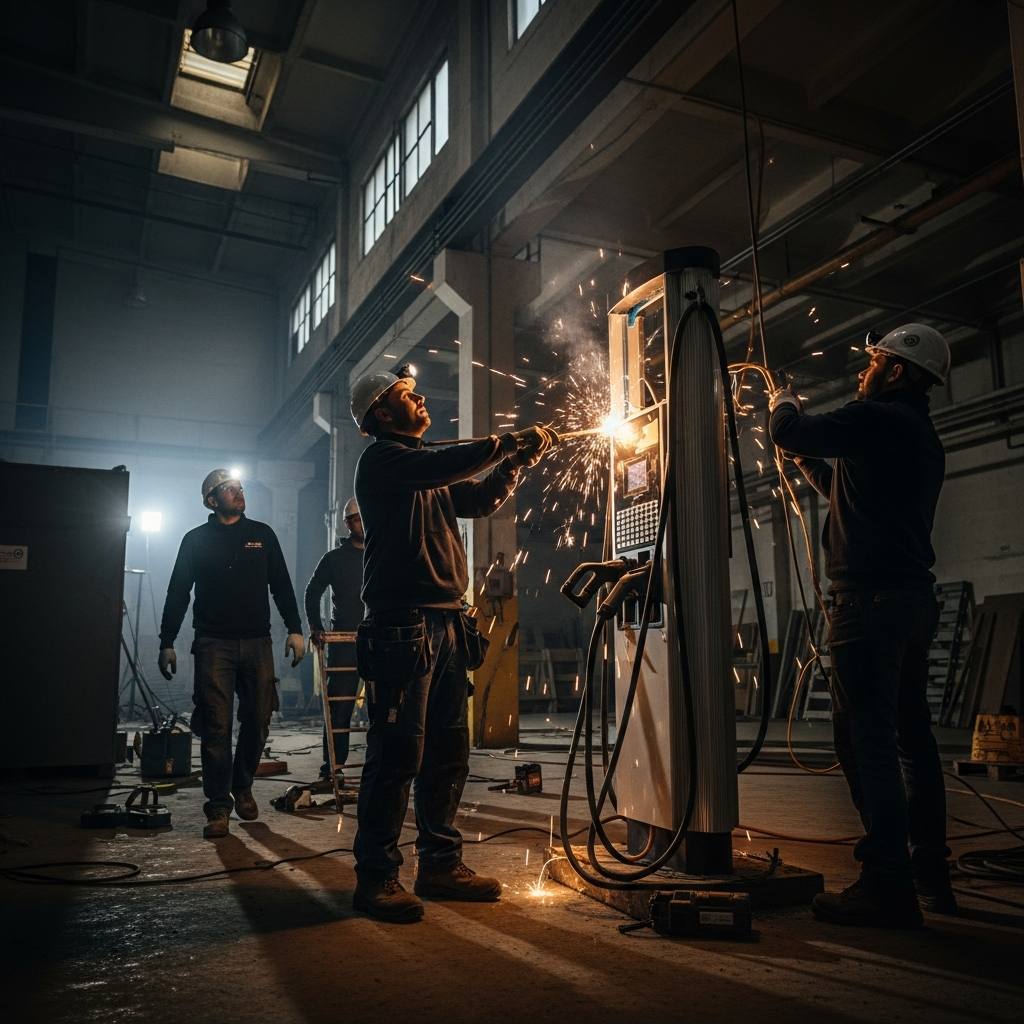
Power trouble on a commercial property usually starts small. One charger drops out. Breaker feels warm. Tenant brings in new equipment and suddenly the service that was “fine” is not fine anymore. That is why commercial EV charger installation is not just bolting a unit to a wall or setting a pedestal in concrete. Somebody has to look at the load, feeder route, panel condition, grounding, available service, and what the site is supposed to do when utility power gets shaky.
Reuters recently reported on Gaza’s damaged grid, where people have been relying on generators and private charging points just to keep phones and basic devices alive. That is not the same as a retail center or warehouse in Florida. Still, the electrical side of it is easy to recognize. When power is limited, every charging point becomes something that has to be managed. Generators get pushed hard. Temporary cords and panels take abuse. Charging becomes a choke point. On a commercial site, that can mean blocked parking, missed fleet charging windows, delivery problems, unhappy tenants, or a charger bank that trips offline right when people need it.
EV chargers sit on a building for a long pull. Older services were not always designed with that kind of demand in mind. A restaurant may already be loaded with kitchen equipment, HVAC, coolers, lighting, signage, and fire alarm gear. A warehouse may have dock equipment, office loads, lifts, compressors, or future tenant work waiting in the wings. Add chargers without checking the actual capacity and the weak spot usually shows itself. Could be the main switchgear. Could be a full panel. Could be a bad conduit path across a lot nobody wanted to cut open. Utility timing can also drag out longer than expected.
Steel City Electric has run into this kind of planning pressure before, including the Insomnia Cookies buildout in Florida, where retail power had to be laid out around real tenant equipment instead of guesses.
Before chargers get ordered, the boring items need attention. Panel schedules. Demand readings. Breaker space. Trenching. Surface raceway. Transformer capacity. Room for more chargers later. Backup power expectations. A solid commercial EV charging installation has to match how the property actually runs, not just what looks good on a cut sheet.
If your site is looking at EV charging, have the electrical service checked first. Steel City Electric can review the gear, spot capacity issues, and plan the charger work so it does not turn into nuisance trips, downtime, or rework after the equipment is already sitting on site.