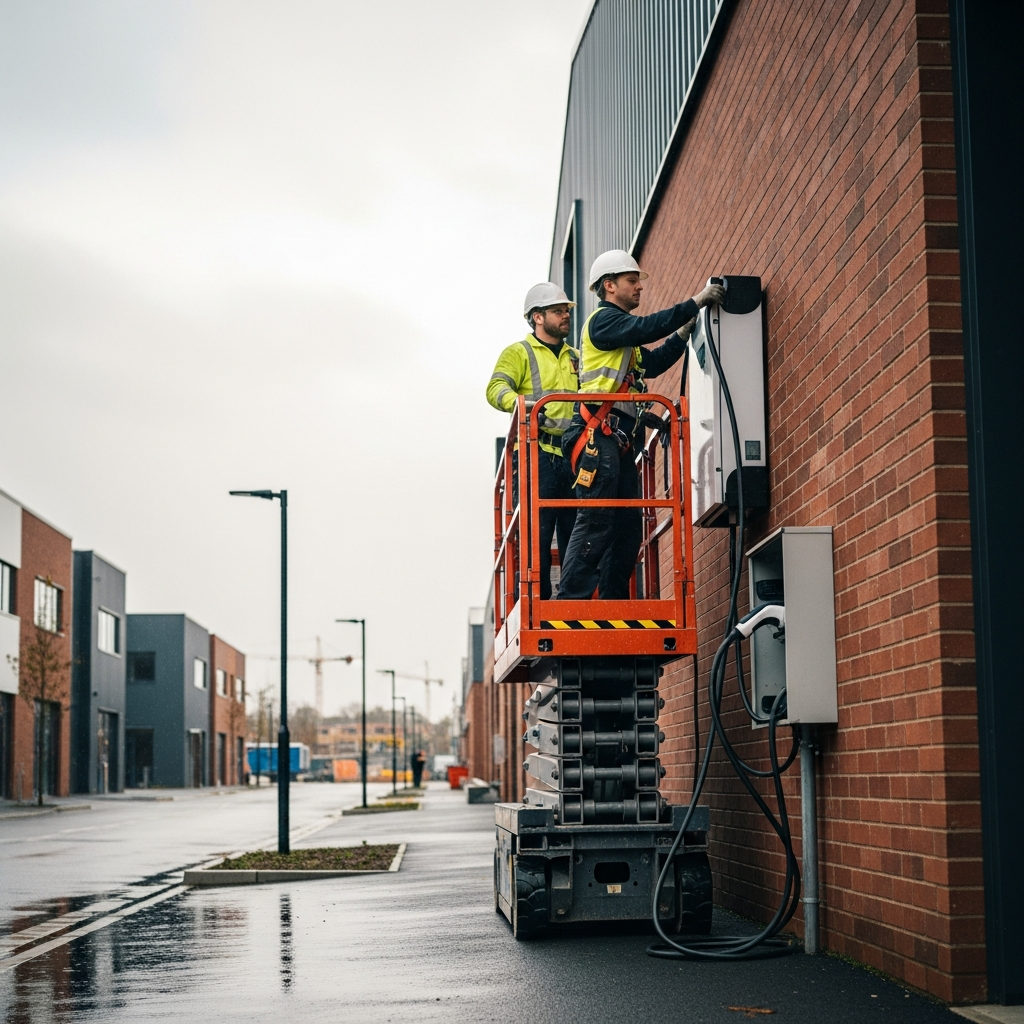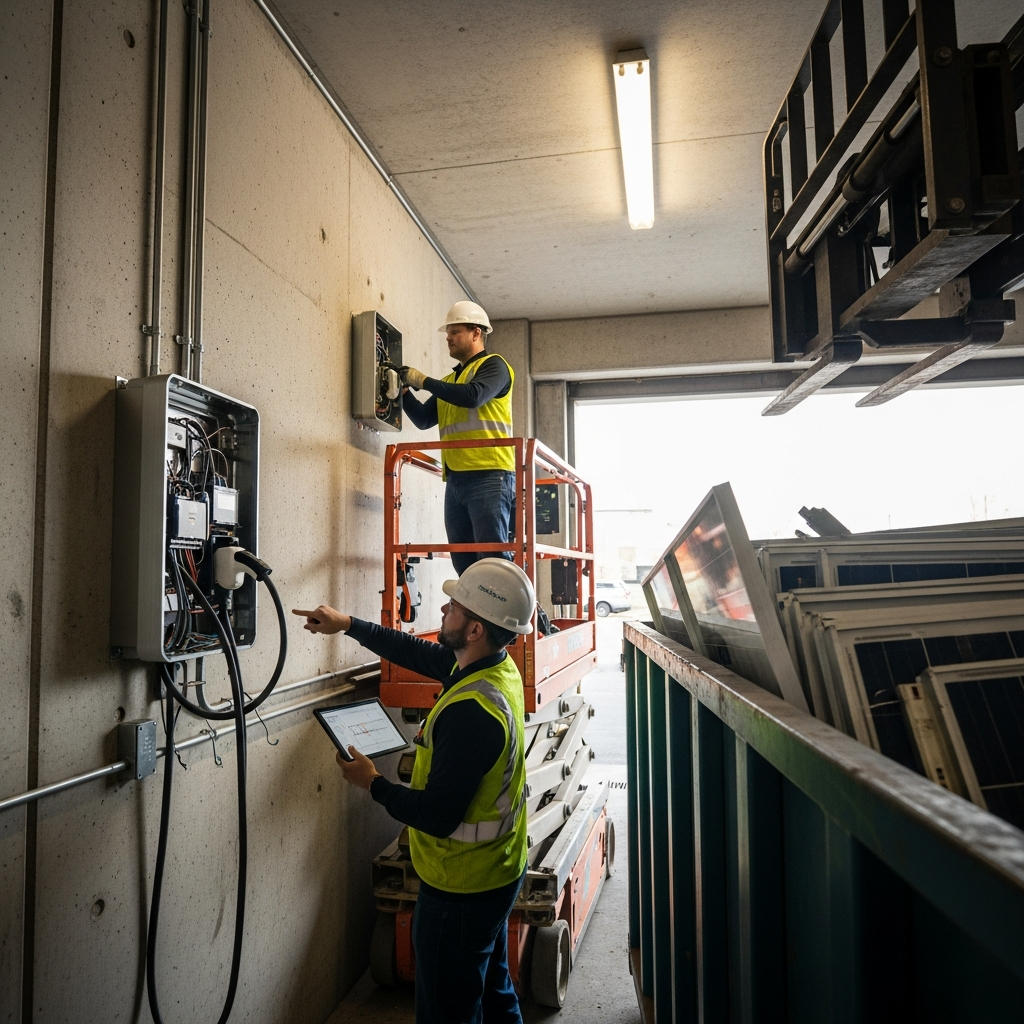
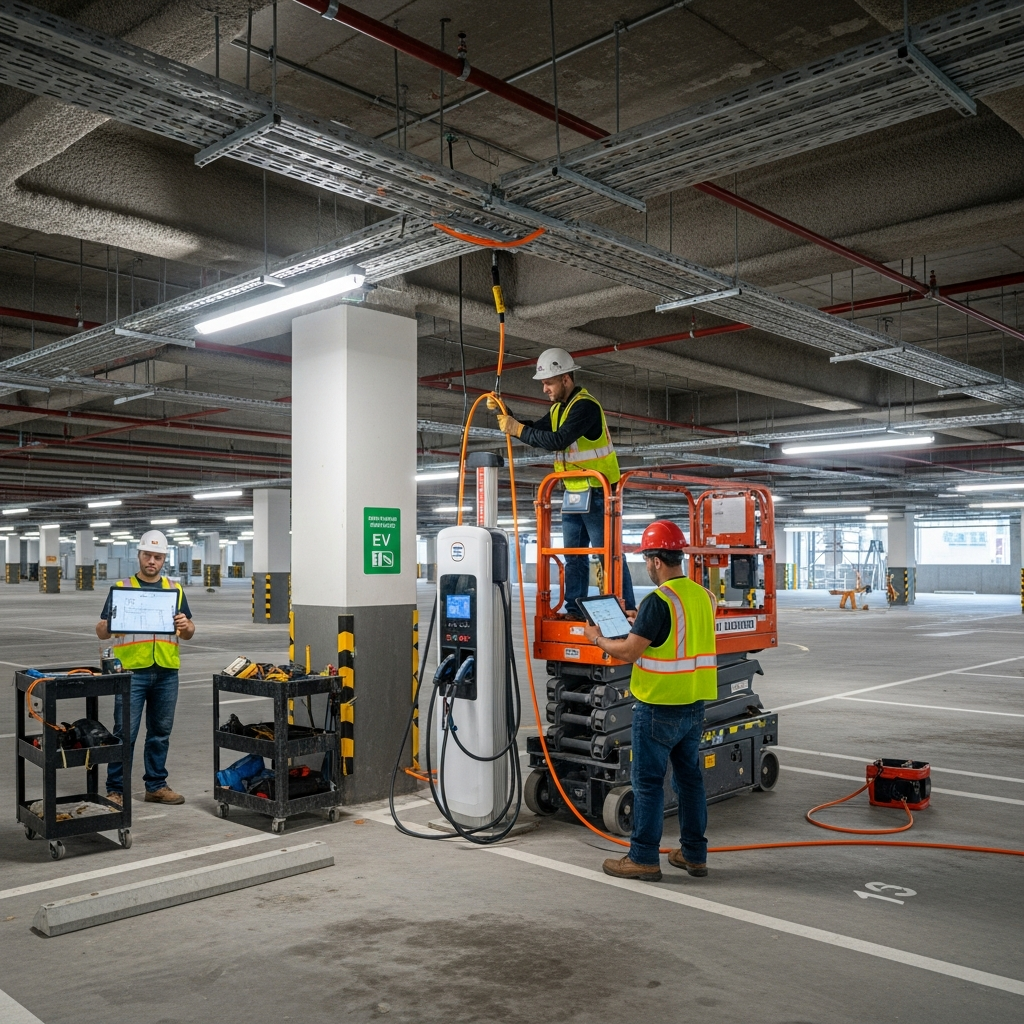
EV chargers on a commercial property can look like a clean parking lot project from the outside. Set the pedestals, pull the wire, land the circuits, done. It usually does not go that way once the panel doors are open. The service may be tighter than anyone thought. Old gear may be packed full. Labels may not match what is actually feeding the space. Afternoon load may already have the equipment hotter than it ought to be. A charger bank is not some small add-on when it gets tied into a working building.
A recent Reuters report talked about AI factory operators watching usable GPU time because even a small loss can cost real money. Different industry, same electrical problem. Uptime depends on the power system doing what it is supposed to do all day, not just during a quick test. In Florida, a site may have cooling, kitchens, security, warehouse equipment, office loads, data equipment, and employee or fleet charging all pulling from the same backbone. Add charging without checking the real load and it does not take long to find the weak spot. Breakers start nuisance tripping. Voltage gets ugly. Gear runs hot.
That is why commercial EV charger installation needs to be handled like infrastructure work. The field work starts before the charger is bolted down. Service capacity, panel space, feeder paths, trench routes, transformer limits, disconnect locations, utility timing, and load management all matter. So does the question nobody likes to answer late in the job: what happens when every charger is being used at the same time. Some properties need a wider review of commercial electrical services before the first pedestal is set.
Steel City Electric has dealt with the same kind of planning on tenant buildouts like Insomnia Cookies in Florida. That job needed a service upgrade sized for actual retail use, not wishful numbers on paper. Same lesson applies here. Figure out the load before the equipment is sitting on site and the schedule is already tight.
For AI-heavy facilities, warehouses, retail centers, office buildings, and fleet yards, the problem is bigger than one dead charger. Bad planning can bleed into operations. Trucks wait. Staff lose charging access. Maintenance gets pulled into avoidable issues. Charger installs need clean routing, proper protection, space for future expansion, and straight coordination with the existing electrical system. Steel City Electric handles Commercial EV Charger Installation with that jobsite reality in mind. Once a facility is live, nobody wants to open walls, shut panels down, or rework feeders because something basic was missed at install.