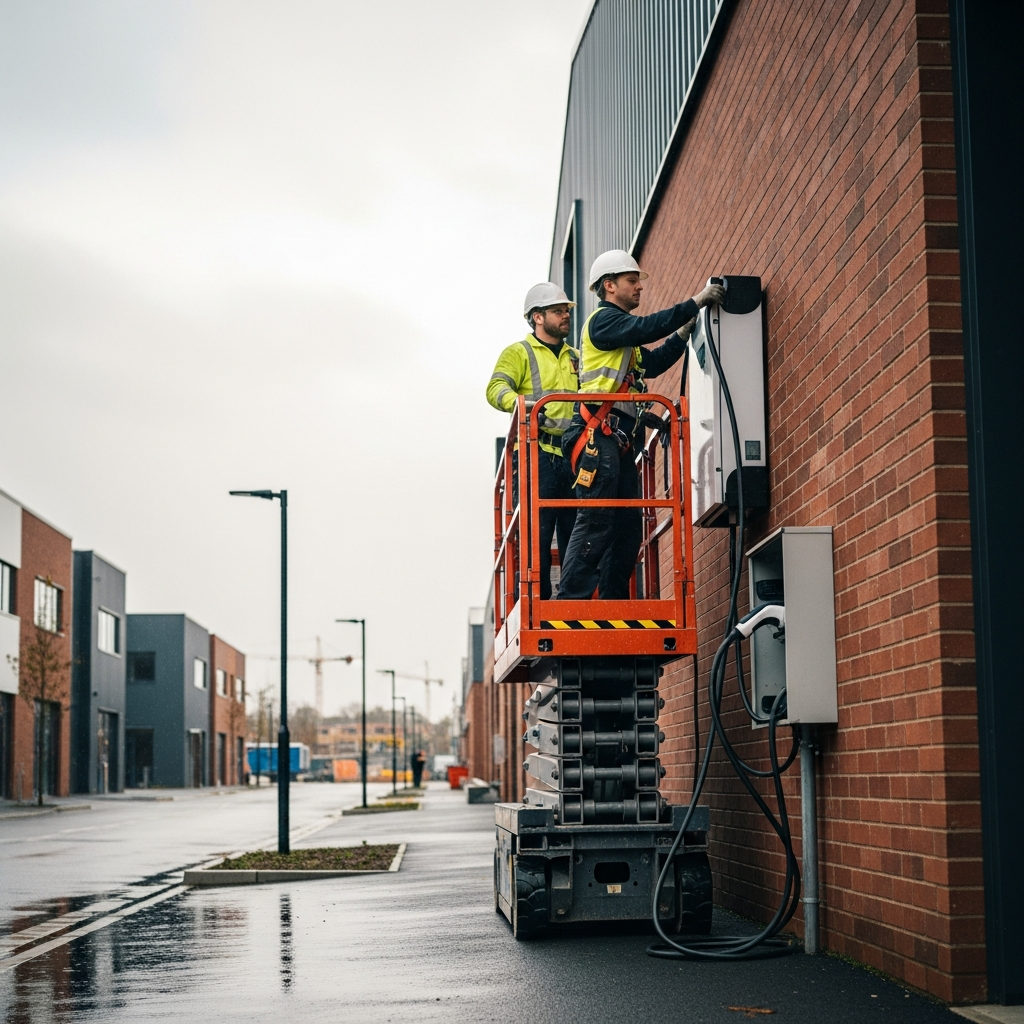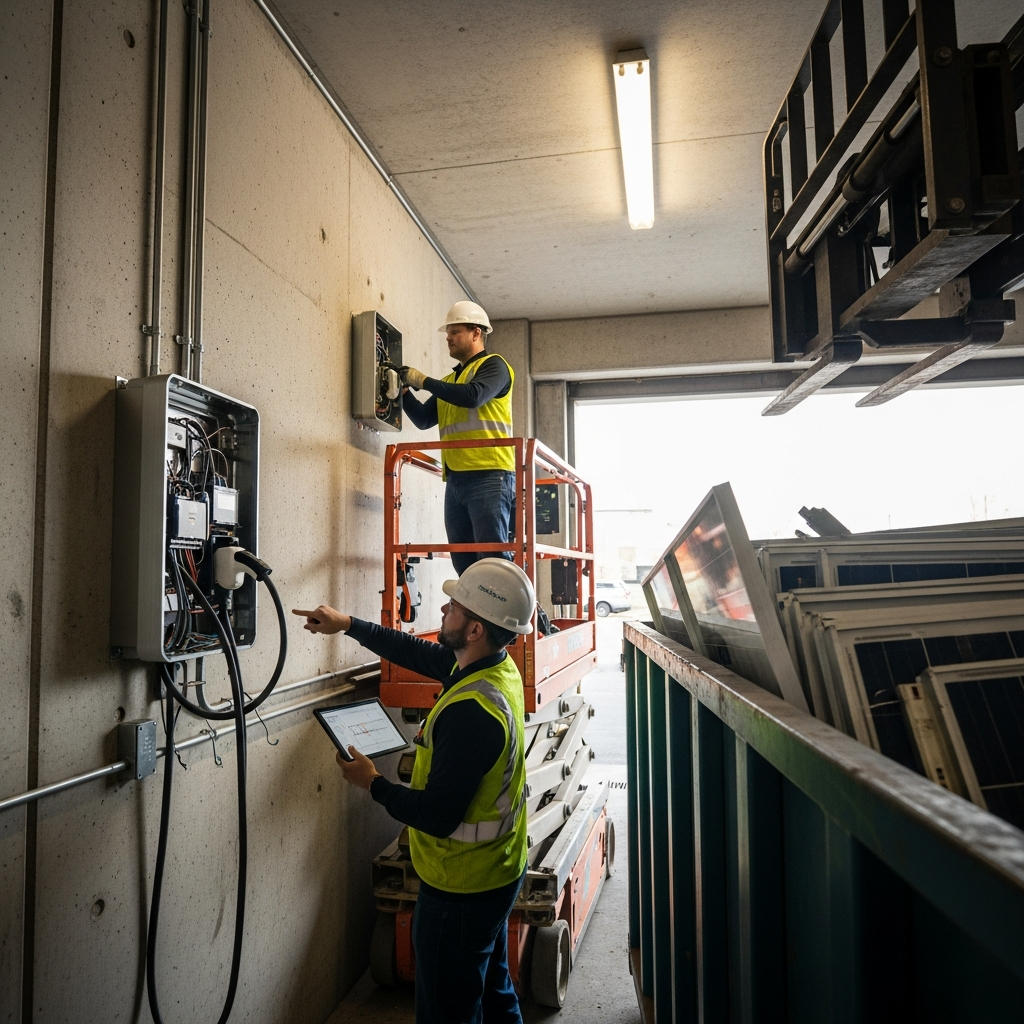
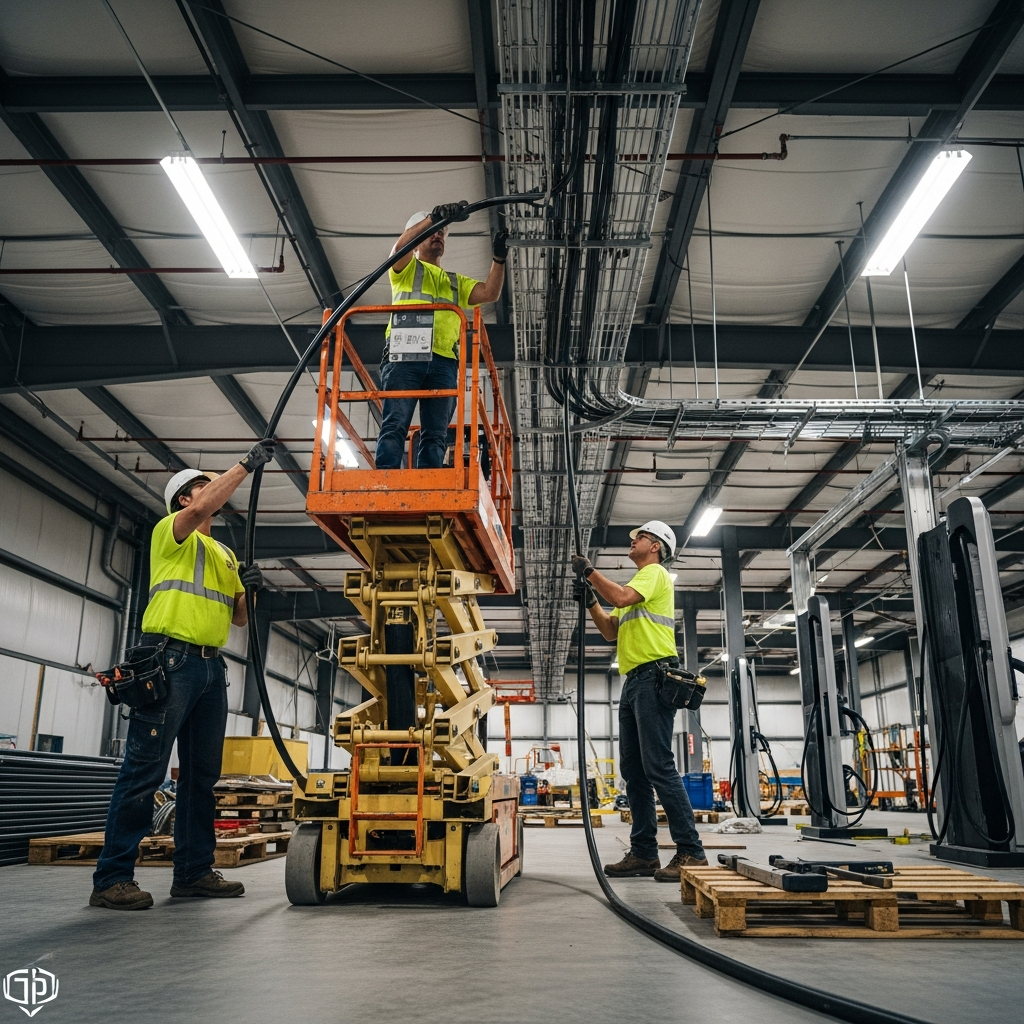
EV chargers look clean when the bollards are in and the cords are wrapped. Before that, it is panel covers off, measurements, old labels that may or may not be right, and a walk from the electrical room out to the parking stalls. That is where the job usually gets decided. Service size, spare breaker space, transformer capacity, conduit route, voltage drop, tenant load, Florida heat. A site can have ten open parking spaces and no easy electrical path to use them.
Commercial EV charger installation should not start with someone picking chargers online and hoping the building can take it. Two Level 2 chargers may fit with minor work. Six chargers for employees, customers, delivery vans, or fleet trucks can change the whole conversation. The building is already running HVAC, lights, coolers, kitchen gear, pumps, signs, and whatever the tenants added over the years. That load does not disappear because the parking lot needs charging.
The recent power-grid-model project update, version 1.13.39, is software news more than jobsite news. It deals with distribution power system analysis, feeder behavior, load flow, and planning. Still, it points at the same issue contractors run into in the field. EV charging adds load in places that were not always planned for it. The problem may show up at the meter. It may also show up at the transformer, inside a packed panel, in a long conduit run, or during utility review.
Steel City Electric has dealt with that same kind of infrastructure pressure on commercial tenant work, including Insomnia Cookies in Florida. Food service is not EV charging, but the lesson is close enough. The drawings and the real load have to match. If the electrical service is short, the finished space will tell you sooner or later.
On commercial properties, the expensive mistake is usually not the charger itself. It is trenching the wrong way. It is opening a parking lot twice. It is passing inspection and then getting nuisance trips when the afternoon heat, building load, and chargers all hit together. A charger layout may need commercial electrical service review, load calculations, permitting, utility coordination, concrete work, shutdown planning, and room for future equipment.
If chargers are being added at a plaza, office, restaurant, warehouse, or fleet yard, check the electrical system before buying equipment. Steel City Electric handles commercial EV charger installation with the field conditions in mind: service capacity, access, downtime, code, routing, and what the building is already pulling every day.