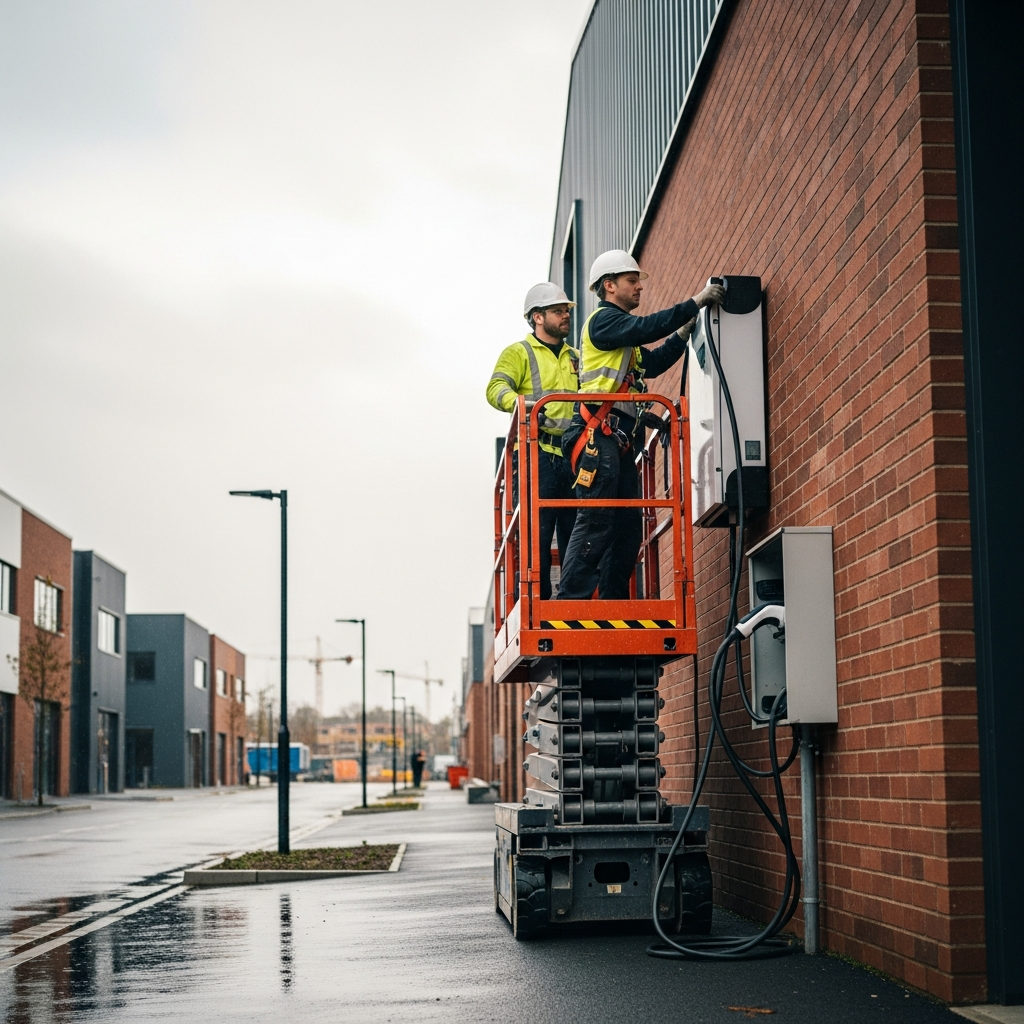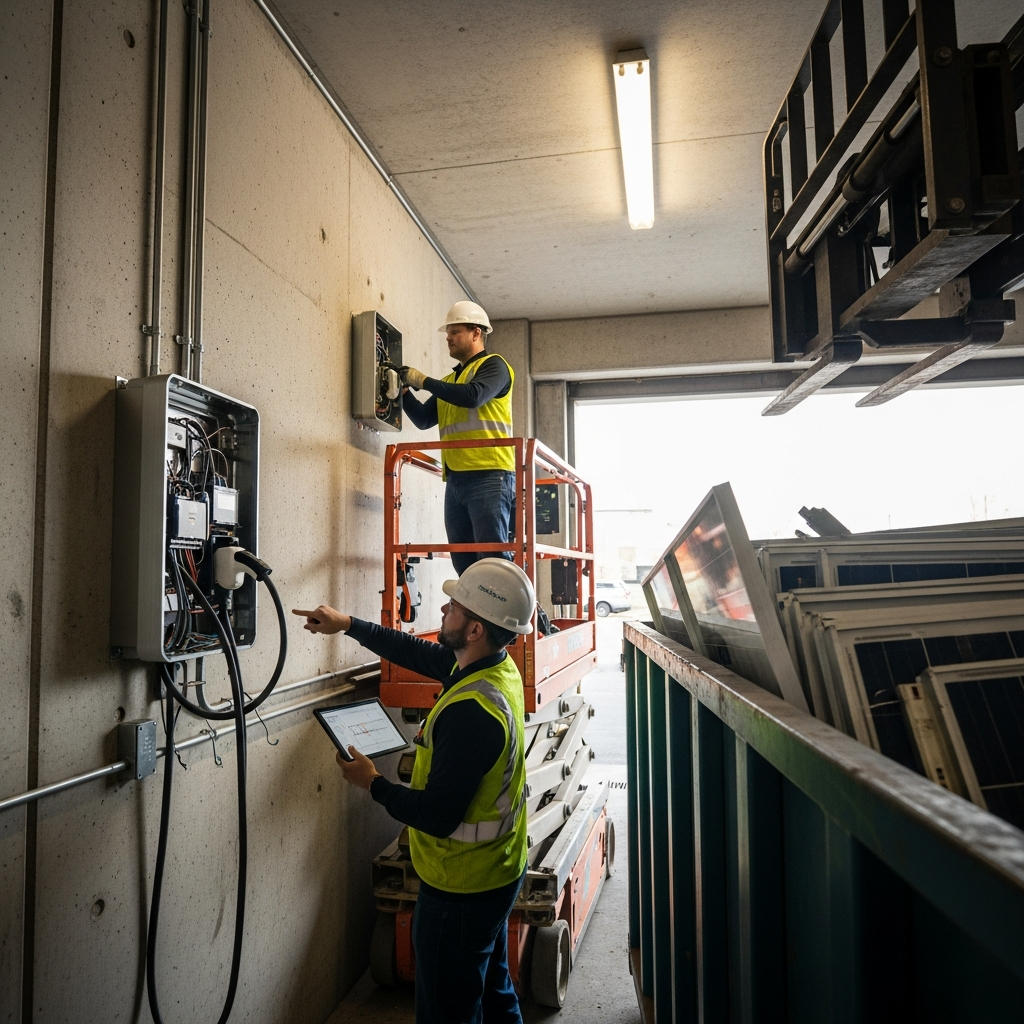
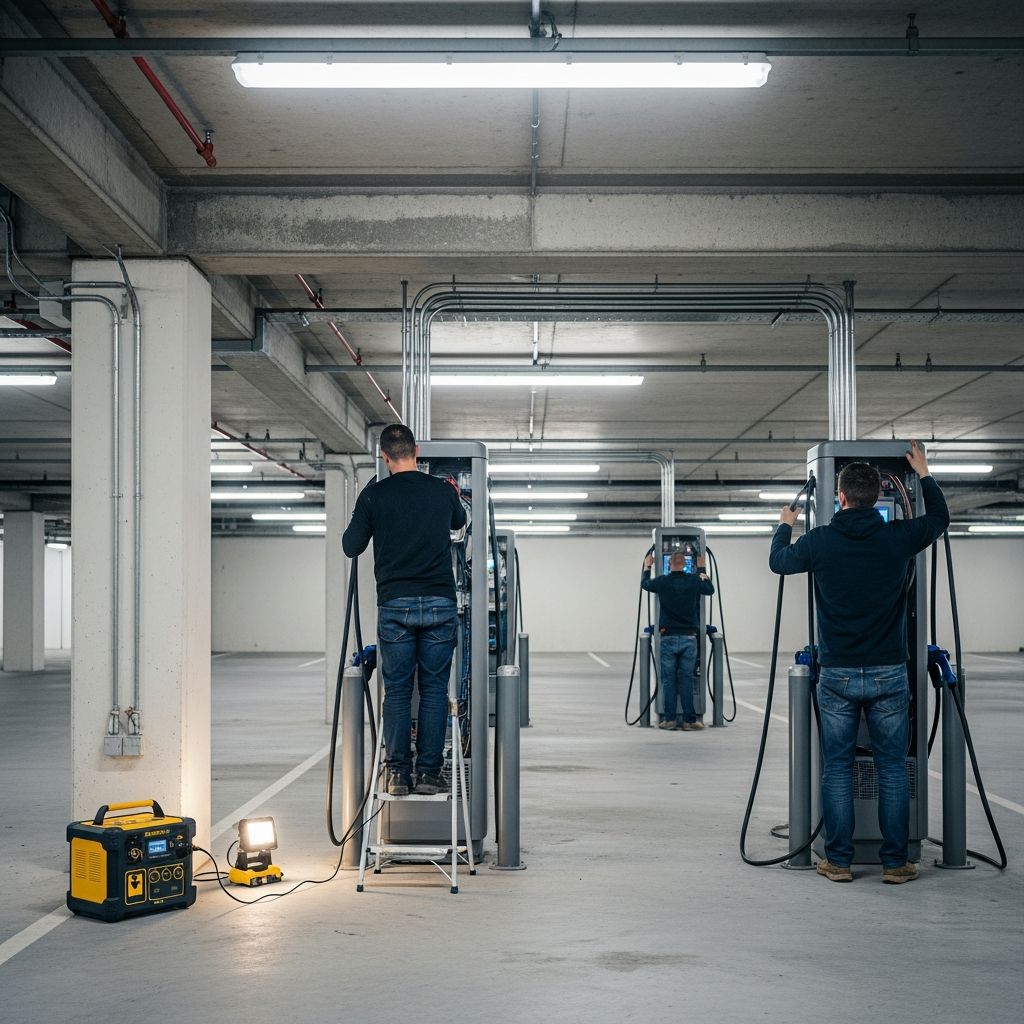
EV chargers look clean once the pedestal is set and the faceplate is on. The hard part is not the charger. It is what is feeding it. On a commercial job, we are looking at the service, panels, feeders, conduit route, spare breaker space, voltage drop, shutdown windows and what the utility is going to allow. If that part gets skipped, the charger may still turn on. Then the problems start later.
The Amazon spring sale on Jackery, Anker and EcoFlow portable power stations has people asking more backup power questions. That is understandable. Those units have a place. They can keep small equipment going or cover a short outage for office items. They are not a plan for Level 2 charging in a parking lot, tenant space or fleet bay. A charger is a steady load. It sits there pulling power for hours. Weak gear does not hide for long under that kind of use.
CNET recently reported the sale pricing on those portable battery units, and the discounts got attention from property owners. The part that gets mixed up is scale. A retail battery box is not the same conversation as Commercial EV Charger Installation. Employee charging, customer charging or light fleet charging needs an actual electrical review. Not a guess from a spec sheet. Not “we have an open breaker.” The full path matters, from the service gear all the way out to the charger location.
Steel City Electric ran into that same kind of service-sizing pressure on the Insomnia Cookies buildout in Florida. The job came down to making sure the tenant load had the power it needed without setting up trouble after opening.
Charger work is similar. A strip center, restaurant, office building or warehouse can look fine on paper. Then the HVAC is running, refrigeration is cycling, lights are on, kitchen equipment is hot and two chargers start pulling. That is when undersized feeders, crowded panels, old breakers and heat issues show up. Some sites need trenching. Some need bollards, new circuits or load management. Others need panel work or utility coordination before a charger should ever be mounted.
Owners looking at chargers this year should start with the electrical path, not the hardware box. Where is the service? Where can conduit actually run? What has to shut down? Can the existing equipment carry the added load safely? Steel City Electric handles this field work through its commercial electrical services, including charger planning, installation support and service upgrades when the building is not ready for the added demand.