
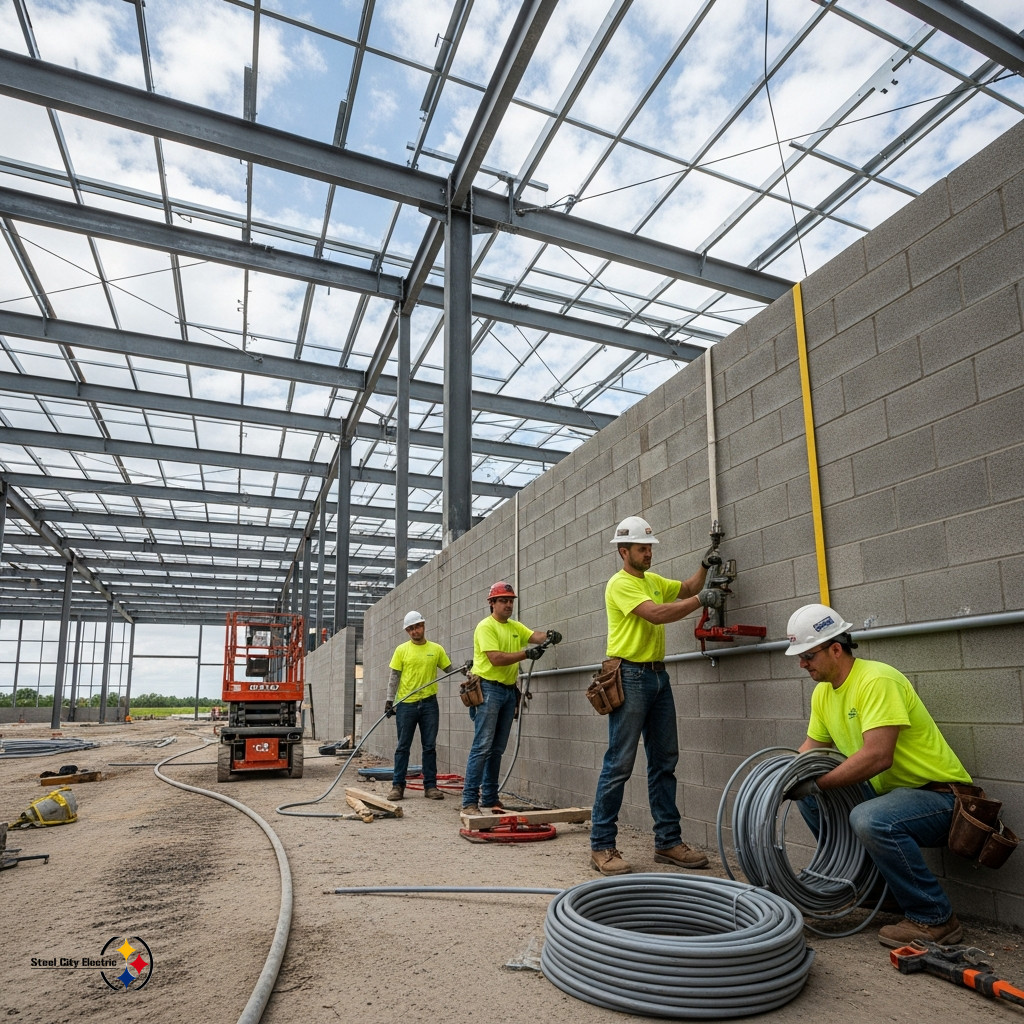
Electrical rough-in on a commercial job can get ugly fast when the permit side drags. The dates on paper may not move, but the field still loses days. Then everyone shows up at once. HVAC wants the same ceiling space. Fire alarm is looking for pathways. Low voltage needs sleeves. Walls get framed before every box location is talked through. By the time the electrician gets a clear look, the route that made sense on the drawing may already be blocked by duct, steel, plumbing, or a change nobody pushed down to the crew.
That is why commercial new construction electrical work needs to be pulled into the schedule early, not after the permit finally clears and everyone is already behind. The raceways, feeders, panels, lighting controls, gear rooms, service entrance, and utility coordination still have to be right. Inspectors are not going to care that the approval came late. The installation either matches the approved plans and code requirements or it gets corrected. On a tight job, that correction usually costs more than the original work would have.
There are ways to keep some control of it. Feeder routes can be walked before mobilization. Underground sleeves and stub-ups need a real check against slab drawings, not just a quick glance. Switchgear, panels, light fixtures, and control packages should not sit in submittal limbo while the shell moves forward. If temporary power is needed, that has to be planned too. A lot of delays do not show up as one big problem. They show up as ten small misses that stack up during rough-in week.
Commercial New Construction schedules can sometimes hide a paperwork delay for a while, but electrical usually ends up carrying the hit. Service equipment, branch circuits, panels, tenant layouts, inspections, and close-in timing all touch other trades. If the electrical contractor is not in the coordination meetings early, the field crew may be asked to make up time with no room left to work. That is when conduit gets rerouted twice, boxes move, or a ceiling conflict turns into a late change order.
Steel City Electric has dealt with that kind of pressure on commercial sites. On LA Fitness Tampa, the crew had to work around existing commercial power conditions and still keep the installation moving in a controlled way. That type of job does not leave much room for guessing. You verify what is there, plan the safest path, and keep the next inspection in sight.
A late permit does not reduce the amount of wire, conduit, gear, lighting, or coordination a building needs. It just pushes the squeeze onto the field. Owners and general contractors planning a new build should bring the electrical contractor in before the schedule is boxed in. For rough-in planning, service coordination, and inspection-ready installation, Steel City Electric handles commercial new construction electrical work with the actual jobsite sequence in mind.