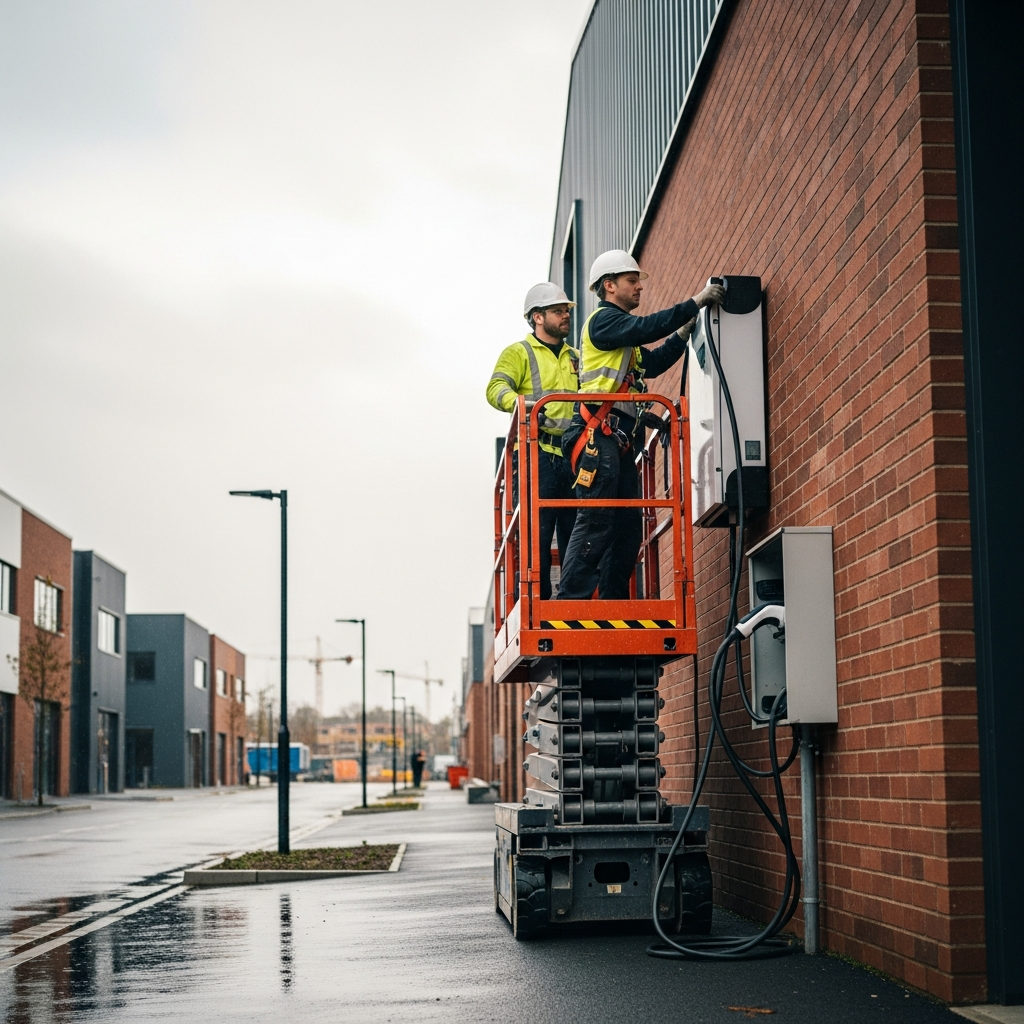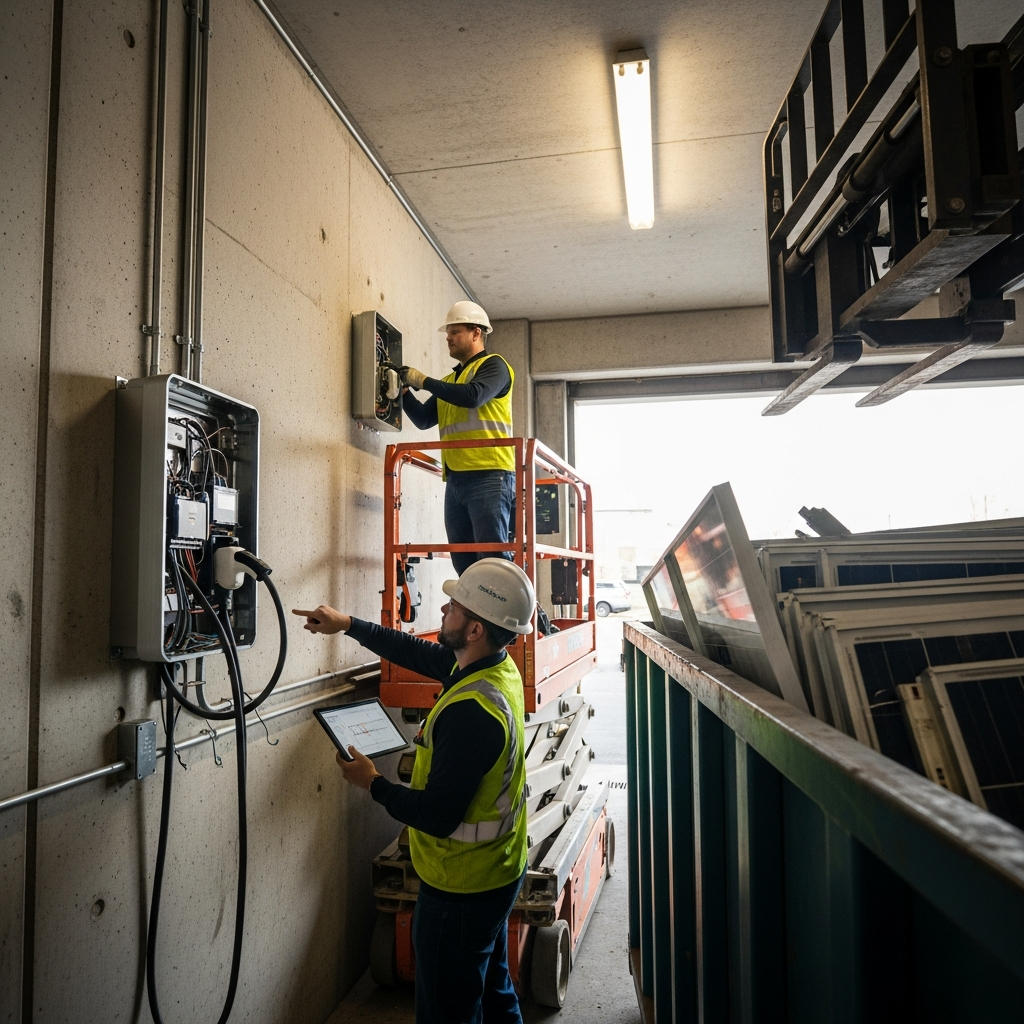
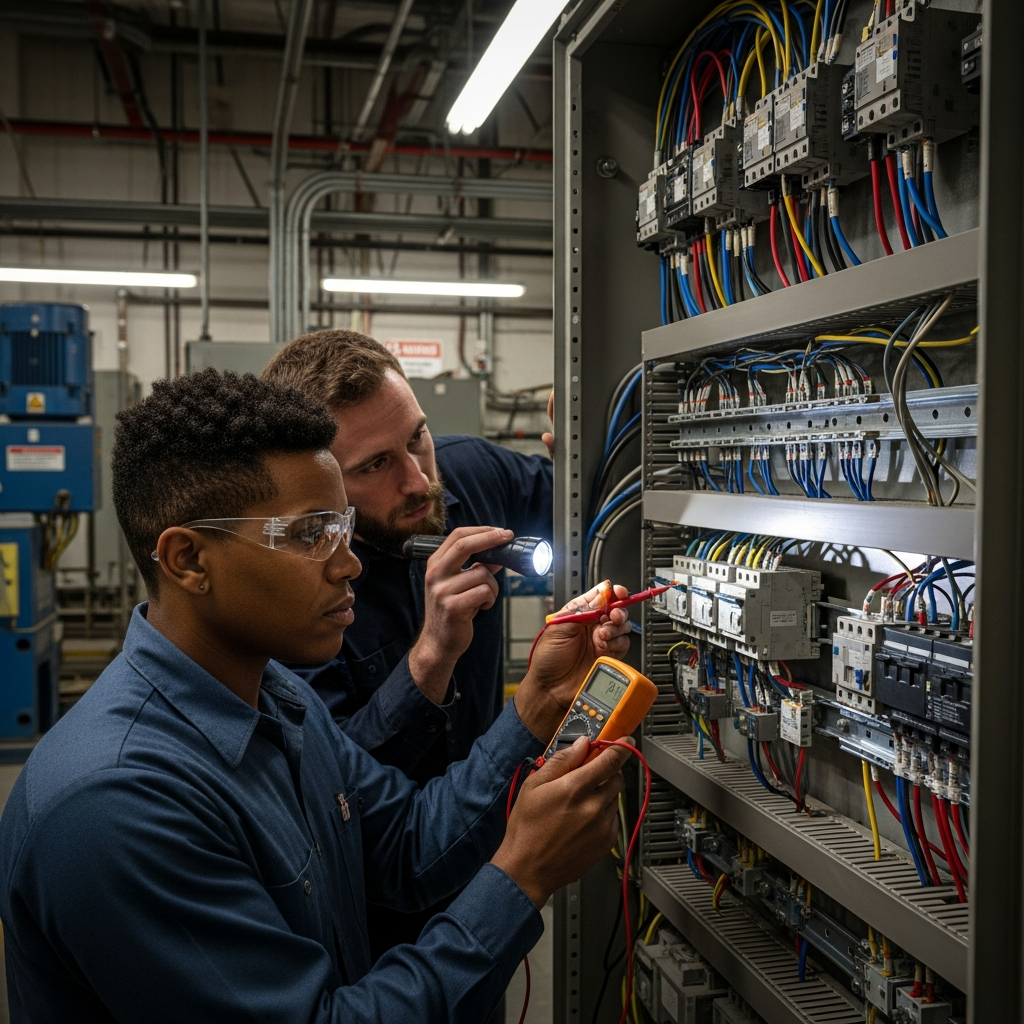
Commercial repair calls usually come in half-described. Somebody says a breaker feels hot. A starter is buzzing. A lift station quit again. Maybe the line runs fine empty, then trips as soon as product hits it. By the time an electrician gets there, operators have already reset things a few times and nobody is completely sure what happened first. That is normal field work. The job is to find what failed, what is being pushed too hard, and what equipment can stay on while the bad section is opened up. In industrial buildings it gets tight quick. Long pipe runs, old panels, utility gear, wet locations, cut insulation, outdoor disconnects, and machines with hard starts all show up at once. Good commercial-industrial electrical repair is not parts swapping. It is meter work, isolation, safe shutdowns, repairs that hold, and getting the plant back on power without creating the next problem.
The recent power-grid-model 1.13.36 update, tied to a Python/C++ library for distribution power system analysis, is more of an engineering-side item. Still, the subject fits what repair crews see in real buildings. Loads do not fail neatly on paper. Voltage drops show up at the far end of a feeder. One bad connection heats a cabinet. A pump start pulls down equipment that should not be affected. A site with newer machines tied into older electrical gear can hide the real issue for a while. The failed part may only be the symptom. The cause might be a feeder that has been living overloaded, poor coordination, weather intrusion, or equipment added years ago with no real look at the service capacity.
Steel City Electric has dealt with those conditions on working sites, including the All Points Equipment project in Palmetto, Florida. That job included underground conduit, an outdoor electrical panel, and power infrastructure for industrial mixing equipment, lift stations, and silo operations. Work like that has to be thought through before the trench is closed. Utility routing, panel placement, silo power, equipment loads, and outdoor exposure all matter. Later, if something trips or burns up, the repair crew cannot just stare at the loudest machine and call it solved. They need to know how the system was built and what else is tied to it.
For plant managers, warehouse operators, and commercial property owners, the clock is usually the real pressure. Pumps down, refrigeration off, conveyors stopped, crews waiting, trucks sitting. It adds up fast. A capable contractor traces the failure, repairs damaged conductors or gear, corrects panel issues, and looks for the reason the call happened in the first place. Steel City Electric handles commercial and industrial electrical repair for Florida facilities that need straight answers, safe work, and power restored the right way.