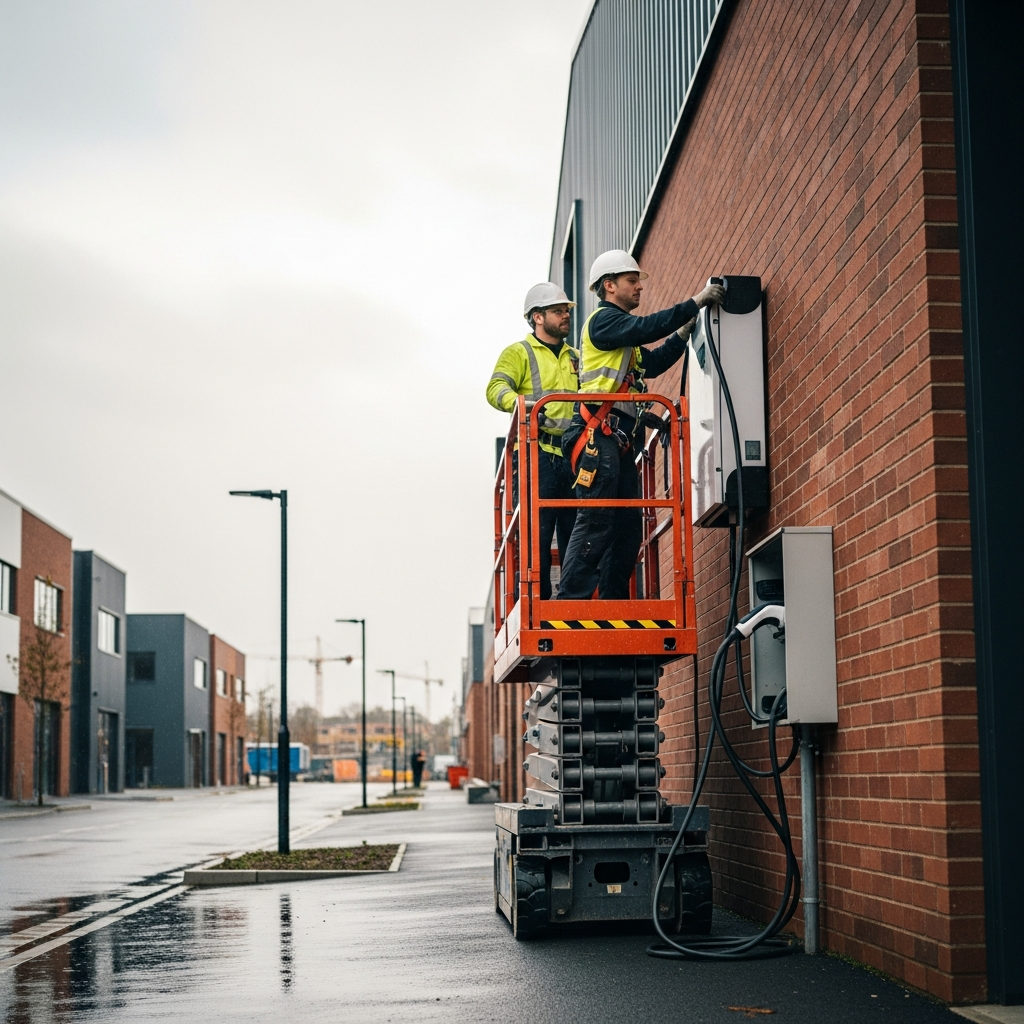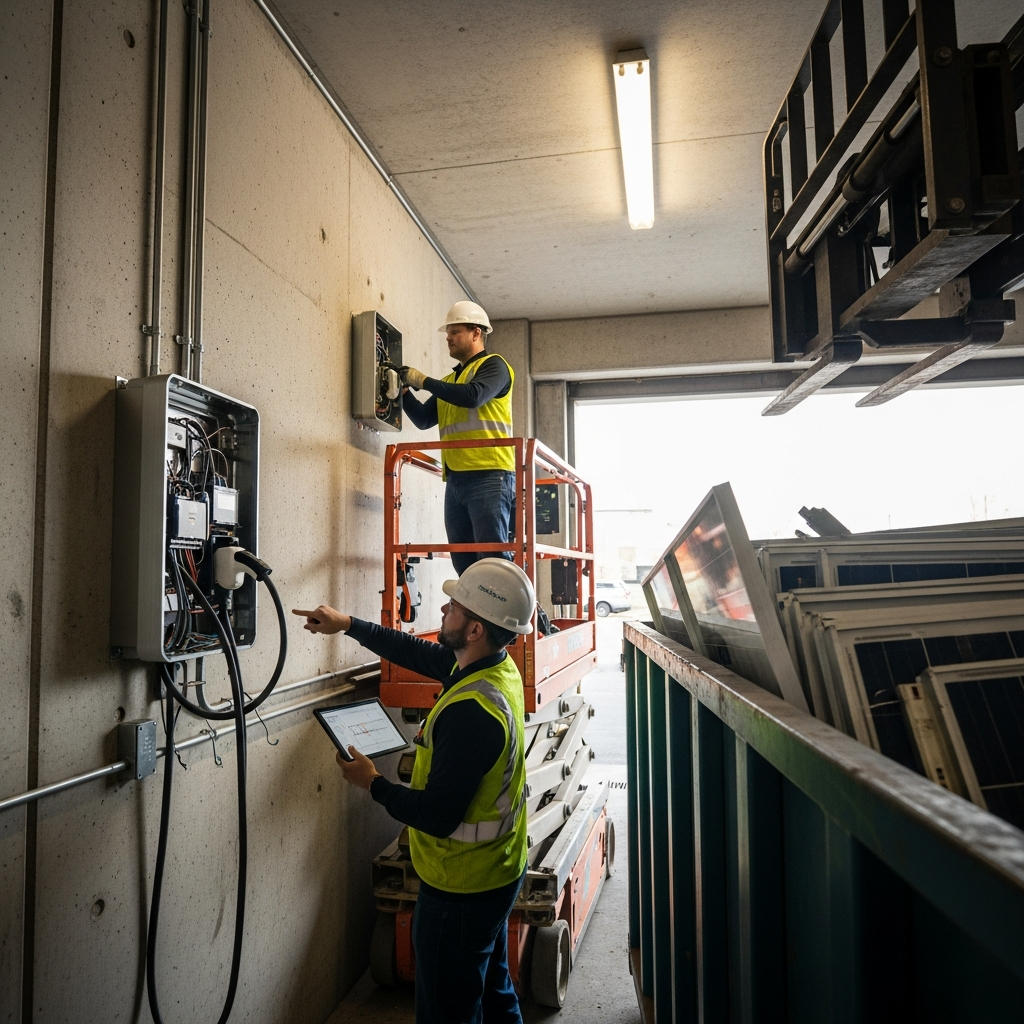
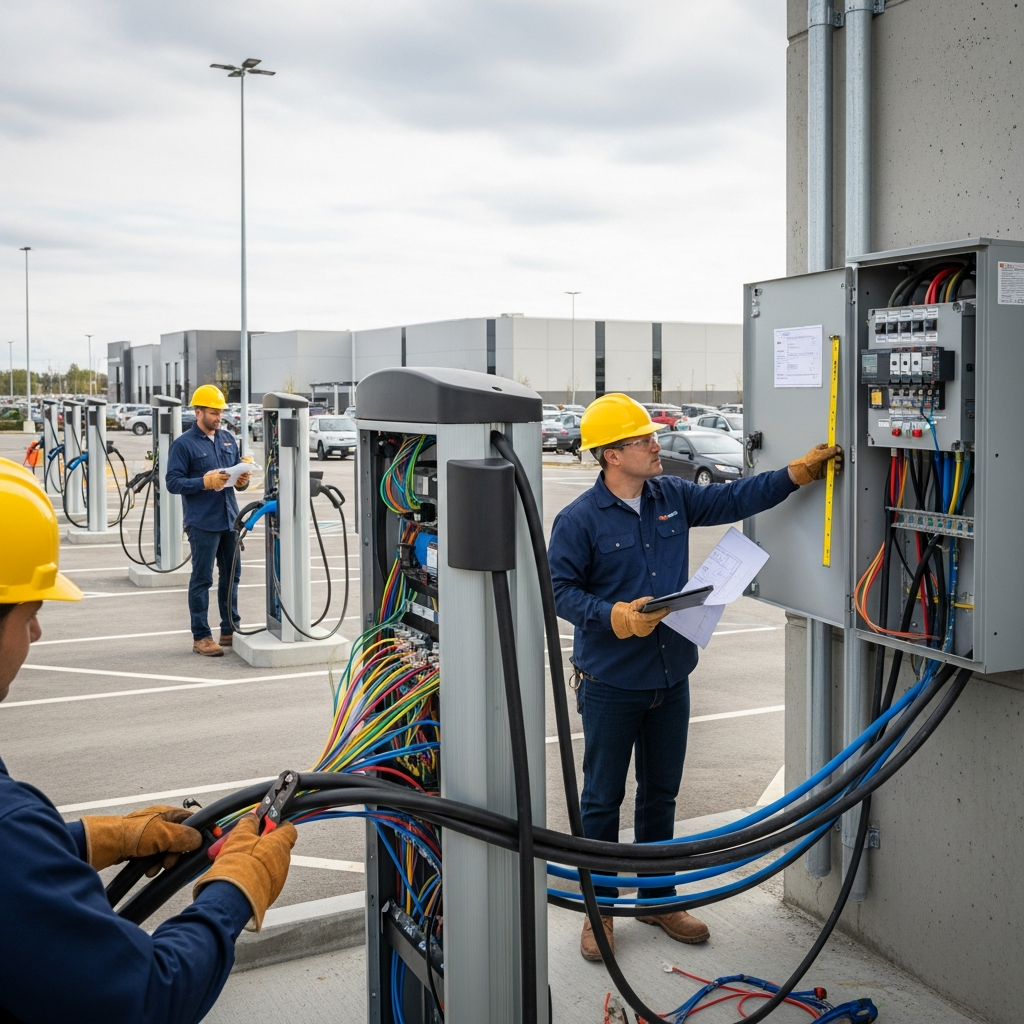
EV chargers on a commercial job are easy to underestimate. On paper it may be a few pedestals, a feeder, some bollards, and a clean note on the plan set. In the field it usually turns into something else. The service is older than expected. The spare breaker space is not really usable. The transformer is already carrying more than anyone thought. The trench route crosses irrigation, lighting, data, or a tenant area that cannot be shut down. That is why Commercial EV Charger Installation needs to be treated as building power work, not just parking lot work.
AP News recently covered the growing concern around grid problems, cyber threats, and outages that last longer than a quick reset. That matters on commercial properties. Once ownership starts asking for chargers, backup power, refrigeration, site lighting, access control, security, and point-of-sale equipment to stay available, the electrical room becomes the real starting point. Somebody has to decide what is critical and what is not. That needs to happen before gear is bought and before concrete or asphalt gets opened up.
Chargers bring a hard load. Sometimes it is manageable with controls. Sometimes the site needs a service upgrade, utility coordination, new distribution, panel changes, or a different charger layout. The part that gets missed is what happens when power drops. Do the chargers restart all at once. Do they stay locked out. Do they compete with emergency loads. A bad sequence can cause nuisance trips or make a generator plan worthless. For retail centers, restaurants, fleet lots, medical offices, and multi-tenant buildings, charger work usually belongs inside a bigger EV charging infrastructure planning discussion.
Steel City Electric has dealt with this kind of service pressure on commercial tenant projects before, including Insomnia Cookies in Florida, where the retail power had to be worked through against real buildout conditions instead of ideal drawings.
The useful work is basic but it has to be done. Open the gear. Verify capacity. Check panels, feeders, utility requirements, emergency loads, and shutdown windows. Look at how the chargers will operate after an outage. Leave room for the next tenant, the next fleet vehicle, or the backup system the owner asks for later. Steel City Electric can walk the site and build a clearer path for commercial EV charger installation that fits the property without pushing the service past what it can handle.