The power-grid-model project just put out its 1.13.40 release, with updated tools for distribution power system analysis in Python and C++. Most building owners are not reading release notes like that. They are looking at a full panel, a hot tenant space, or a meter room that has no room left to breathe.
That is how these jobs usually show up. Somebody adds a freezer. A restaurant changes the cook line. A medical office brings in equipment that was not on the original plan. EV chargers get mentioned after the lease is already signed. Then we open the panel and the schedule is wrong, half the labels are old, and one breaker feeds something nobody expected. The question is always simple on the surface: can we add it? The real answer takes a little more work.
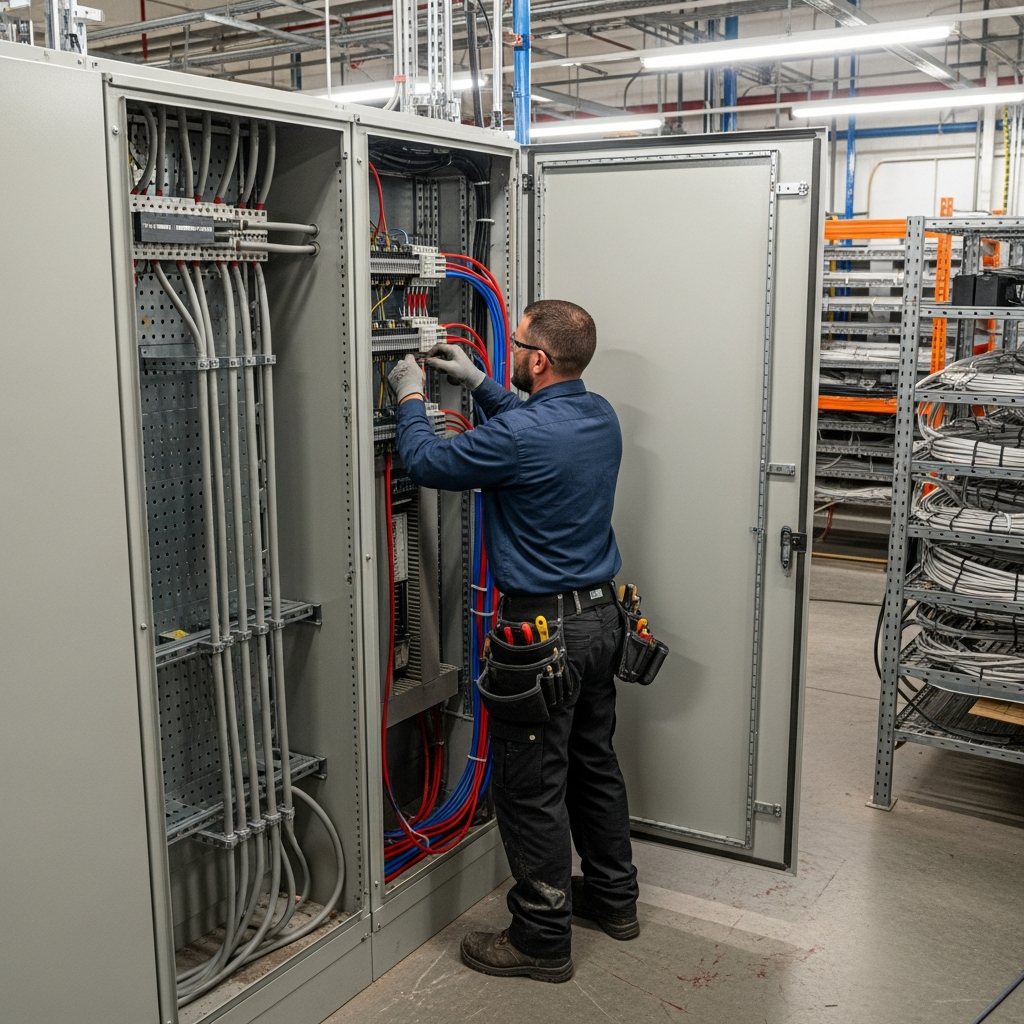
Commercial panel work is not a clean drawing exercise once you are standing in the electrical room. Steel City Electric has to check feeder size, available fault current, grounding, clearances, panel condition, service capacity, tenant loads, spare spaces, and what was done by the last crew years ago. Some panels are truly overloaded. Some are just packed full. Some are old enough that adding another circuit is asking for trouble, even if there is a place to land it.
That is why commercial electrical panel installation and upgrades have to be planned around the business, not just the gear. A kitchen cannot sit dead during prep. A store cannot lose registers in the middle of the day. A warehouse with dock doors, office loads, lighting controls, and security equipment needs a real shutdown plan. Not a vague morning arrival and a hope that everything goes smoothly.
Steel City Electric has handled this kind of panel upgrade work where the existing service had to stay useful until the changeover was ready. That is the part people forget. The old system is still running the building while the new work is being lined up. Panel location matters. Wall space matters. Conduit paths matter. So does whether the inspector is going to flag old work once covers come off and everything is visible.
The newer grid modeling tools in the industry are really pointing at the same issue we see inside commercial properties every week. More load is being pushed into buildings that were not built for it. In the field, that looks like nuisance trips, warm breakers, crowded gutters, voltage complaints, added equipment with nowhere to land, and expansion plans that stop at the electrical room door.
Sometimes the panel upgrade is part of larger commercial electrical wiring for new equipment, remodels, or tenant buildouts. Other times it comes after several service calls where patching the same old setup no longer makes sense. If the panel is worn out, undersized, badly labeled, or poorly laid out, commercial electrical repairs may only delay the same conversation.
The hard part is not just installing the new panel. It is keeping the building from taking a bigger hit than necessary. Gear has to be ordered early. Utility requirements need to be checked. Inspections have to be coordinated. Circuits need to be identified before the outage. Labels need to be right when power comes back on. None of that is flashy work, but it prevents the mess that happens when a business finds out too late that its electrical service cannot keep up.
Steel City Electric treats commercial panel installation and upgrade work like field work, because that is what it is. Safer gear, usable capacity, cleaner labeling, fewer surprises, and a shutdown window that respects what the customer loses when the power is off.