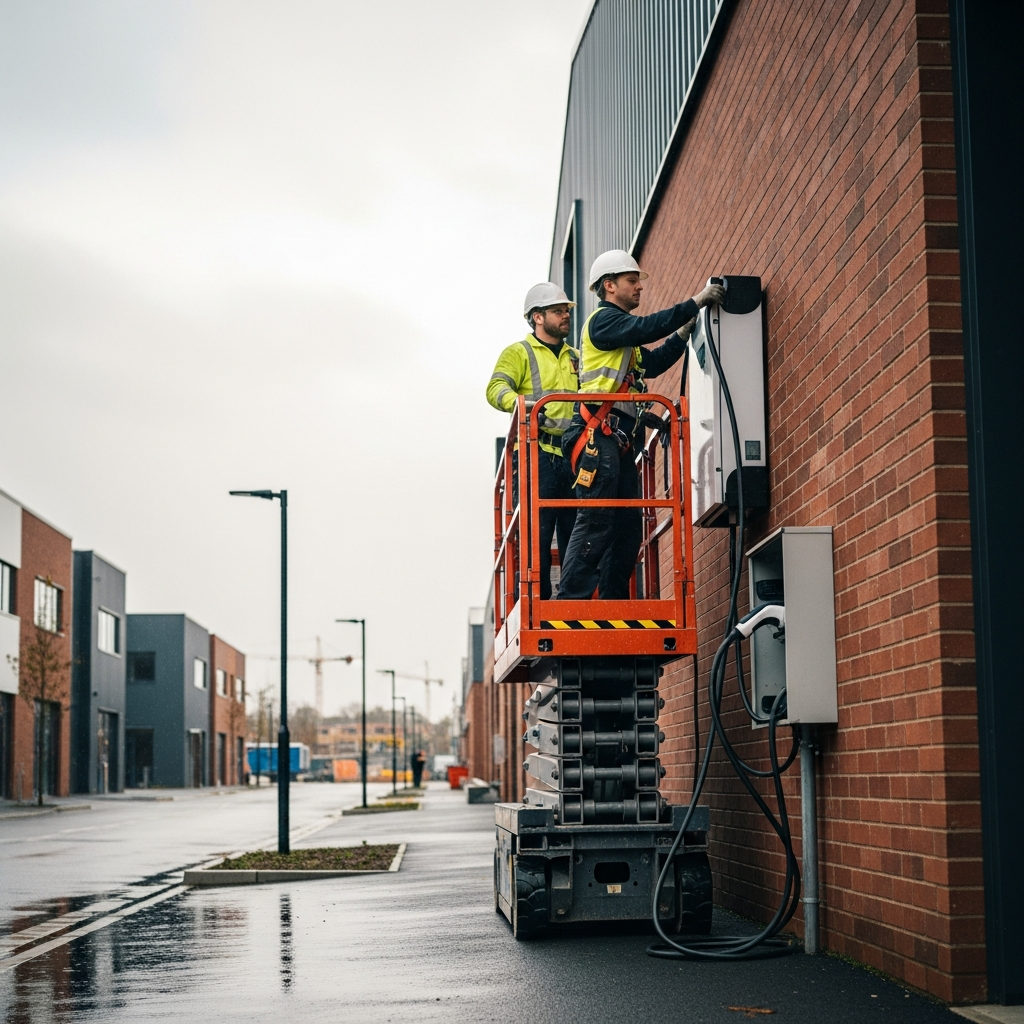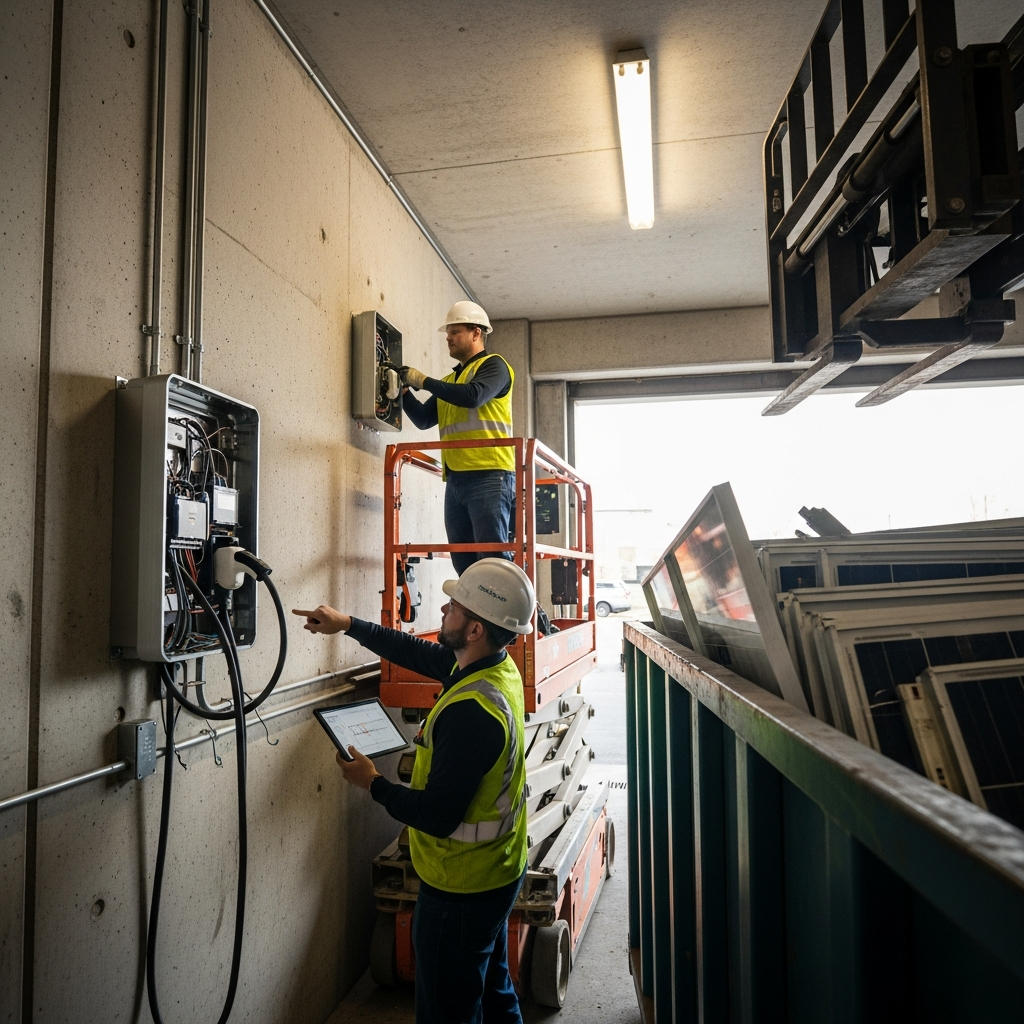
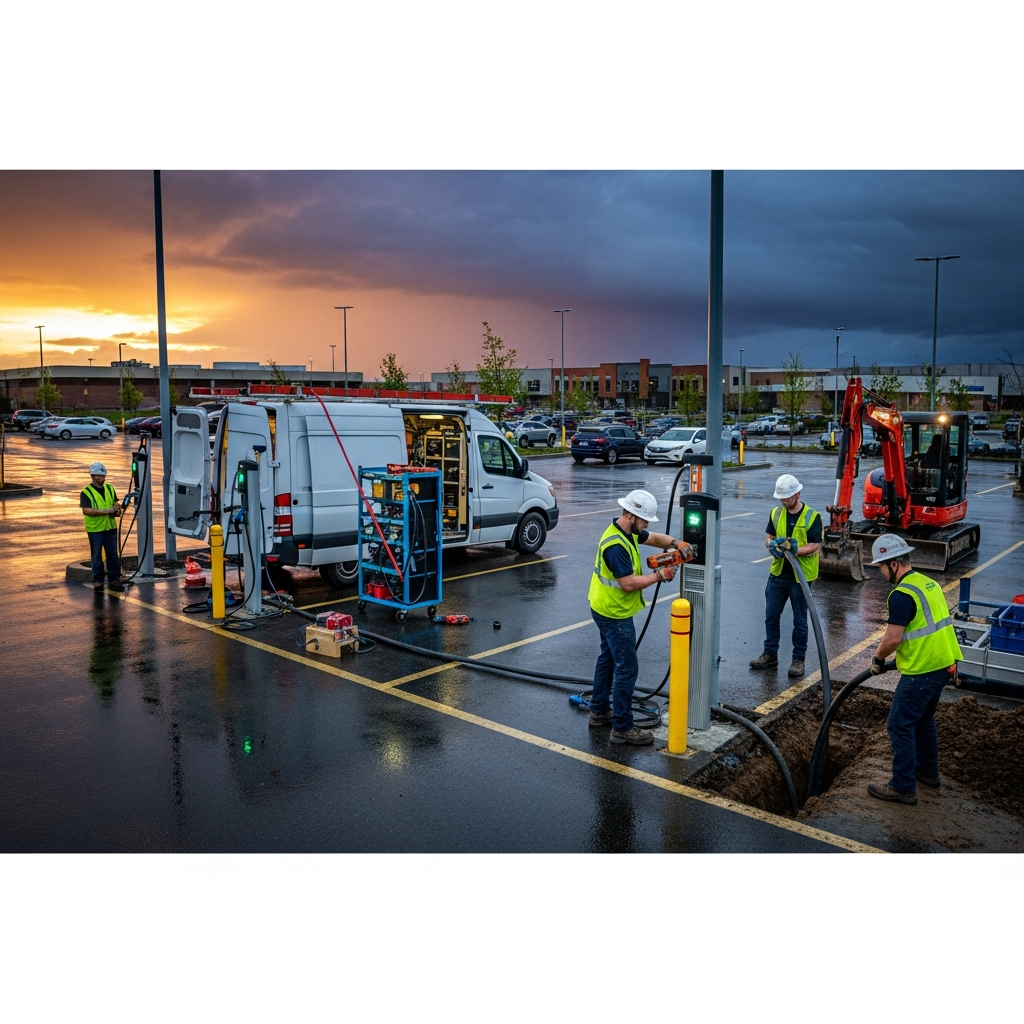
EV charging on a commercial property is rarely as simple as setting a charger, landing conduit, and calling it done. That part is visible. The harder part is behind it. Load available. Panel room. Utility timing. Where vehicles stack up. Who has access after hours. What happens when five units plug in at once instead of one. A charger can pass the brochure test and still be wrong for the building. That is why Commercial EV Charger Installation needs to be handled like site infrastructure, not a parking lot add-on.
Fleet charging makes small electrical problems expensive. One down charger may not look like much until vans are waiting, drivers are calling dispatch, parking lanes are blocked, and someone is guessing whether the fault is in the charger, the network, the breaker, the feeder, or the service gear. We have seen jobs where the equipment was fine, but the site was never ready for the way people actually used it. Commercial electrical work has to survive real habits, not perfect schedules.
Reuters recently reported that more than 100 Baidu Apollo Go robotaxis stopped in traffic across Wuhan, with some vehicles sitting in live lanes and on elevated roads. That was an autonomous vehicle story on the surface. Still, it points to a bigger operations issue. Any large vehicle system depends on charging windows, site capacity, communications, and a recovery plan when something goes sideways. If one link is weak, everybody feels it fast.
Before chargers get ordered, the service needs a hard look. Not just “how many stations fit out front.” Will the existing gear hold the added load without nuisance trips? Is voltage drop going to be a problem? Is there room for future circuits? Some properties need feeders pulled. Others need switchgear planning, trenching, bollards, lighting changes, concrete work, or utility coordination before the first charger is mounted. On active sites, that planning matters because the business usually cannot shut down while the electrical work gets sorted out.
Steel City Electric handled similar practical load planning on the Insomnia Cookies buildout in Florida, where the power had to match real retail demand, not just what looked clean on a plan sheet.
A hotel does not charge vehicles the same way a service yard does. Employee Level 2 chargers are different from customer turnover charging. Fleet parking is different again. That is where experience with commercial electrical services shows up. The charger layout has to work with the building, the traffic, the service equipment, and the people using it every day.
If EV charging is being planned for your property, start with the electrical review. Check panel capacity, transformer load, conduit paths, disconnect locations, protection, and space for expansion before equipment lands on site. Steel City Electric can review the property, plan the work, and install charging infrastructure built for actual commercial use.