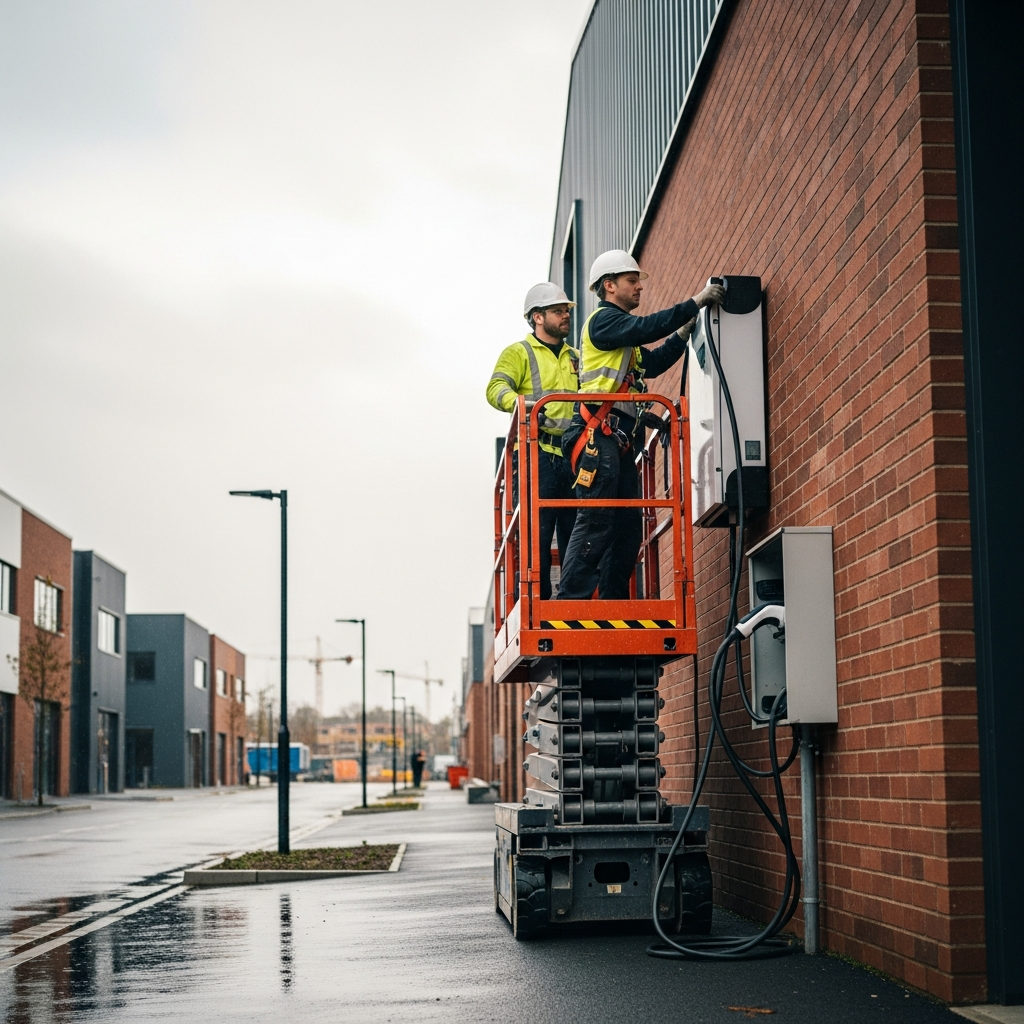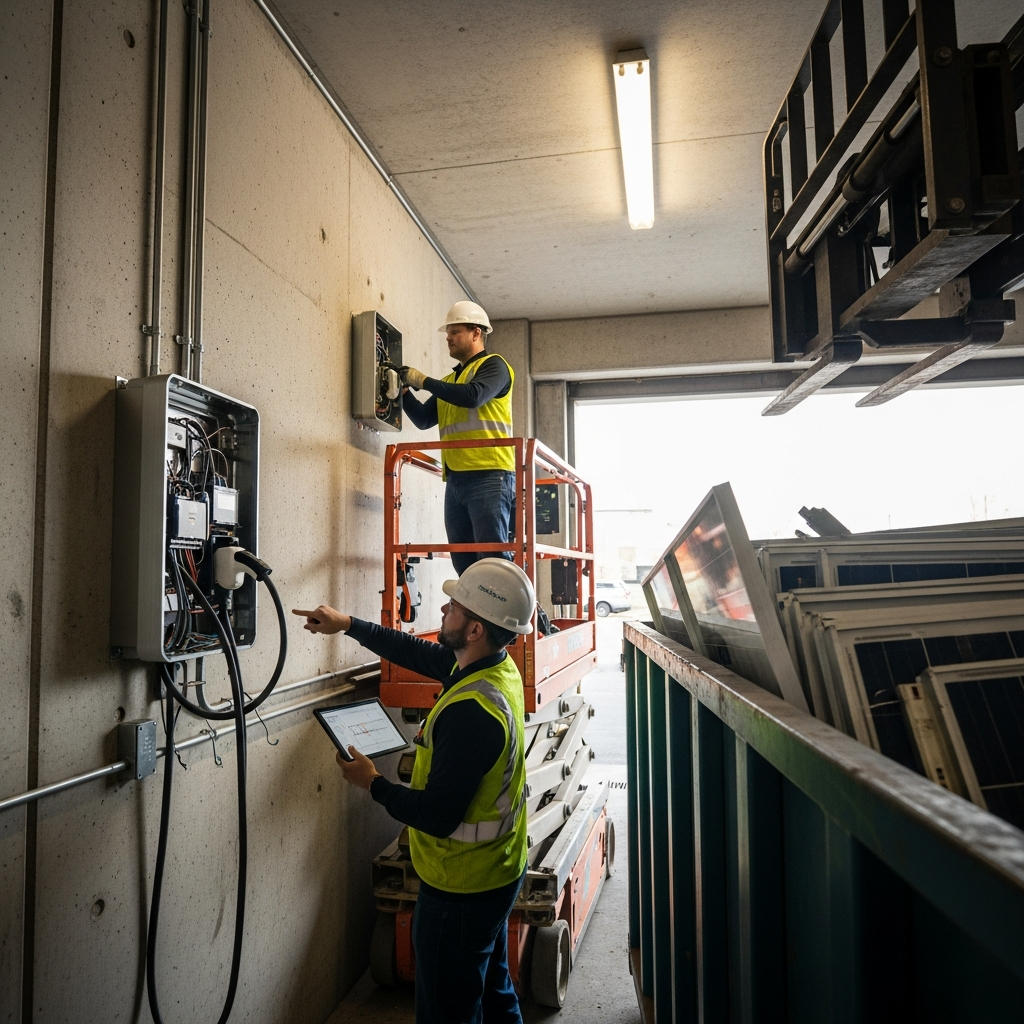
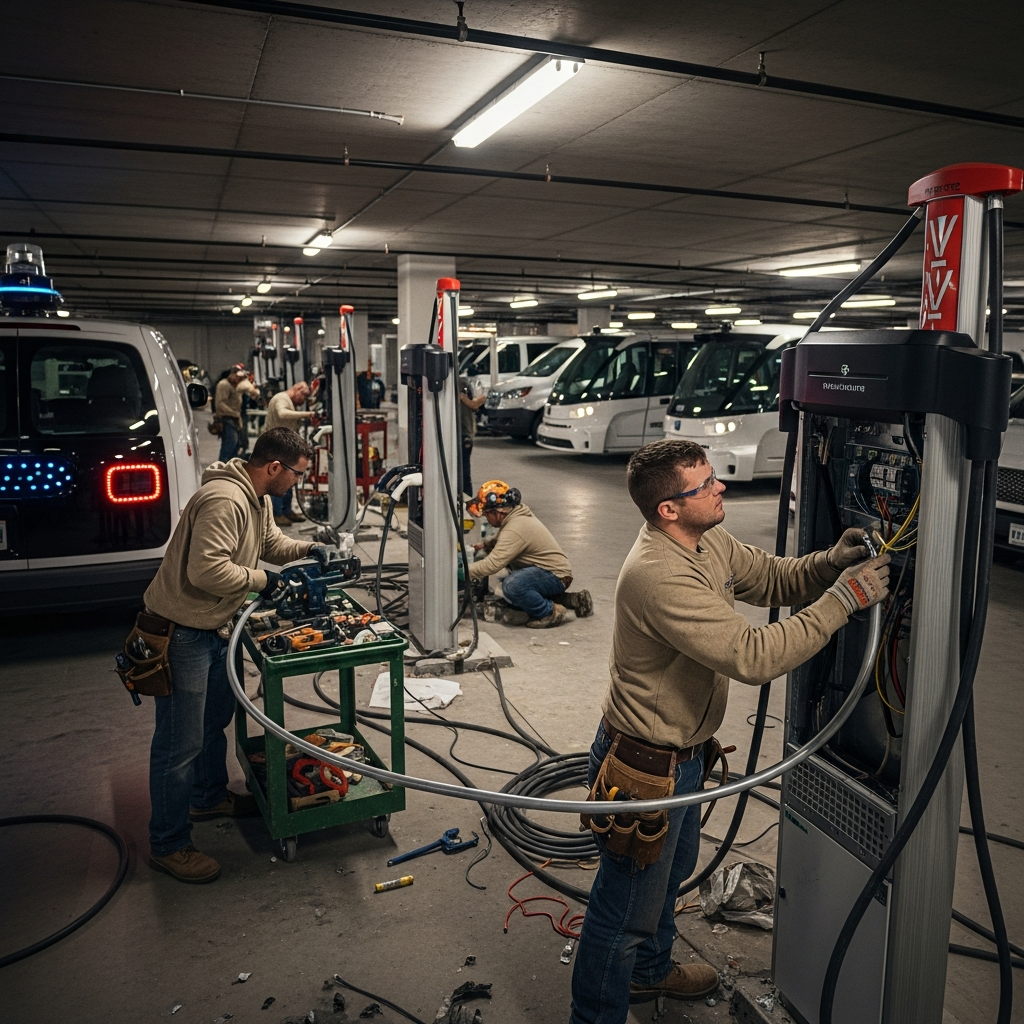
EV charging on a commercial job is not a bolt-it-to-the-wall deal. Anybody who has opened up an older service or tried to lay out chargers in a busy parking lot knows that pretty quick. You are looking at load, gear lead times, utility approval, saw cutting, trench depth, panel space, bollards, ADA routes, networking, and a building owner who still wants the lights, freezers, registers, and air conditioning working while the electricians are on site.
The robotaxi shutdown in Wuhan is a good reminder of how much rides on the support systems. Reuters reported that more than 100 Baidu Apollo Go robotaxis stopped in traffic on city roads and elevated highways instead of getting themselves out of the way. Most of the attention went to the software failure, which makes sense. Still, large EV fleets have another side that is not as flashy. They need charging locations that can take repeated load, recover after problems, and not become the next failure point.
That is where commercial EV charger installation has to be treated like real infrastructure. A depot, hotel, apartment community, retail center, or delivery yard cannot plan from a clean sales sheet and hope it works. If ten vans roll in low at the same time, the amperage does not disappear. It hits the service. If that same service is feeding refrigeration, kitchens, HVAC, lighting, elevators, tenant panels, or site equipment, the margin gets thin fast.
Steel City Electric has dealt with that kind of pressure on Florida commercial work, including the Insomnia Cookies project. Food retail is different from fleet charging, but the electrical lesson is the same. The load has to be figured from how the place actually operates, not from a best-case number on paper.
Backup power can get missed too. Not every site needs a generator sized to run every charger wide open. Many do need the controls kept alive. Gates, cameras, payment equipment, charger communications, lighting, network cabinets, and a few selected charging spots may need protection so the site does not go dark during an outage. That needs to be decided before conduit is in the ground, not after the concrete is patched.
Steel City Electric looks at EV charger installations for commercial properties from the jobsite side first. Where is the service? What can it actually carry? What has to stay on? Where do vehicles queue, turn, park, and charge? For Florida properties adding EV charging, those answers are better handled before the stalls are striped and the parking lot is already cut open.