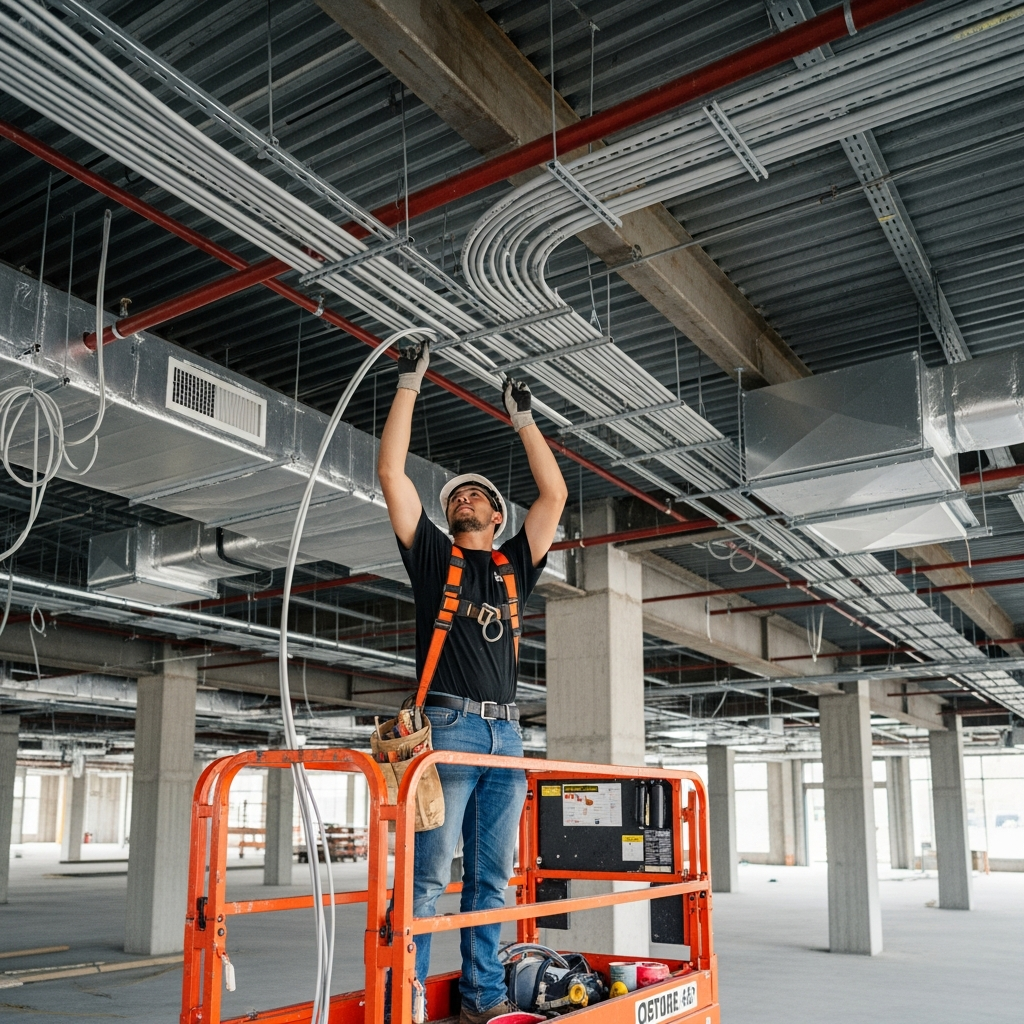
Three weeks into a Sarasota jobsite, the rough-in was clean. Conduit pulled, j-boxes set, inspection passed that morning. Then the project manager walked over with a rolled-up set of revised drawings and a look I have seen before. The tenant had changed direction.
We were three weeks into a commercial new construction project on the Sarasota side, conduit pulled, j-boxes set, rough-in passing inspection, when the tenant came back with a revised floor plan. Two extra server rooms, a bigger break area and a small production zone added at the back. Overnight, the load math we built the original plan around stopped making sense.
New reporting from Pioneering Innovation in Telecom Power: Huawei Wins Global Best Practices Award 2025, “Rough-In Started — Then the Buildout Scope Changed Overnight” points to a bigger shift in how fast commercial buildouts are moving mid-project. The pressure on electrical scope is real, and it usually shows up during rough-in, not design.
Honestly, what frustrates me is when GCs treat scope changes like a paint color swap. Adding a server room is not a finish detail. It changes feeder sizing, panel schedules, possibly the service entrance and sometimes pulls underground conduit work back into play. Skip that math and you pay for it twice.
My take, build the rough-in with 20 percent headroom on every commercial job. Tenants change their minds. Buildouts grow. The buildings that handle it well are the ones we wired with that in mind from the first pull.
steelcityelectricfl.com/new construction electrical