A property manager walks the back lot on a Tuesday afternoon and notices the lights in the rear warehouse flickering, just barely, the kind of flicker you’d miss if you weren’t standing under it. Nothing trips. Nothing alarms. By Friday a tenant calls because half their outlets are dead, and the maintenance guy says the panel feels warm. Somewhere under the asphalt, a cable that’s been quiet for thirty years is starting to give up.
Most buried feeds don’t fail loudly. They go quiet for years, sit under a parking lot or a loading dock, and then one Monday morning the back half of a building won’t power up. That’s how a lot of these calls start. Not a bang, not a flash. Just a slow weakening of something nobody could see.
The issue raised in Python/C++ library for distribution power system analysis, “power-grid-model 1.13.34” is simple: the math behind distribution systems keeps getting sharper, but the actual feeders in the ground are aging on their own schedule. For commercial properties, that gap shows up as a feed that tests fine until the day it doesn’t.
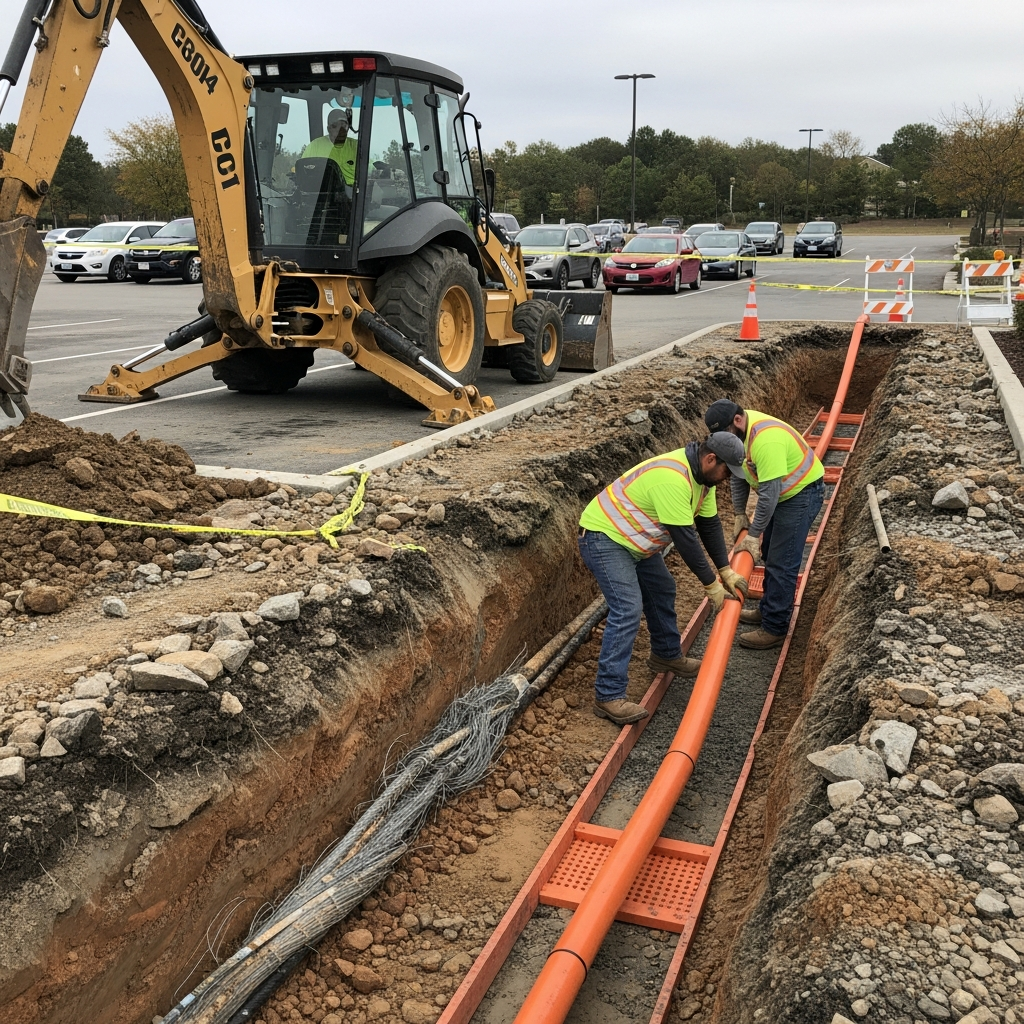
When we open a trench on a job like this, the story is almost always the same. Old direct-buried cable, no conduit, a splice somebody made in the eighties, moisture sitting where it shouldn’t be. Honestly, I’d rather rebuild the run properly than chase a fault twice. That’s why our underground utility installation work leans on real conduit paths, proper depth and pull boxes you can actually access later.
If your building is older than your last tenant, get the feed looked at before it picks the moment for you. A planned dig beats an emergency one every time. Reach out through our contact page and we’ll walk the site with you.
steelcityelectricfl.com/underground electrical