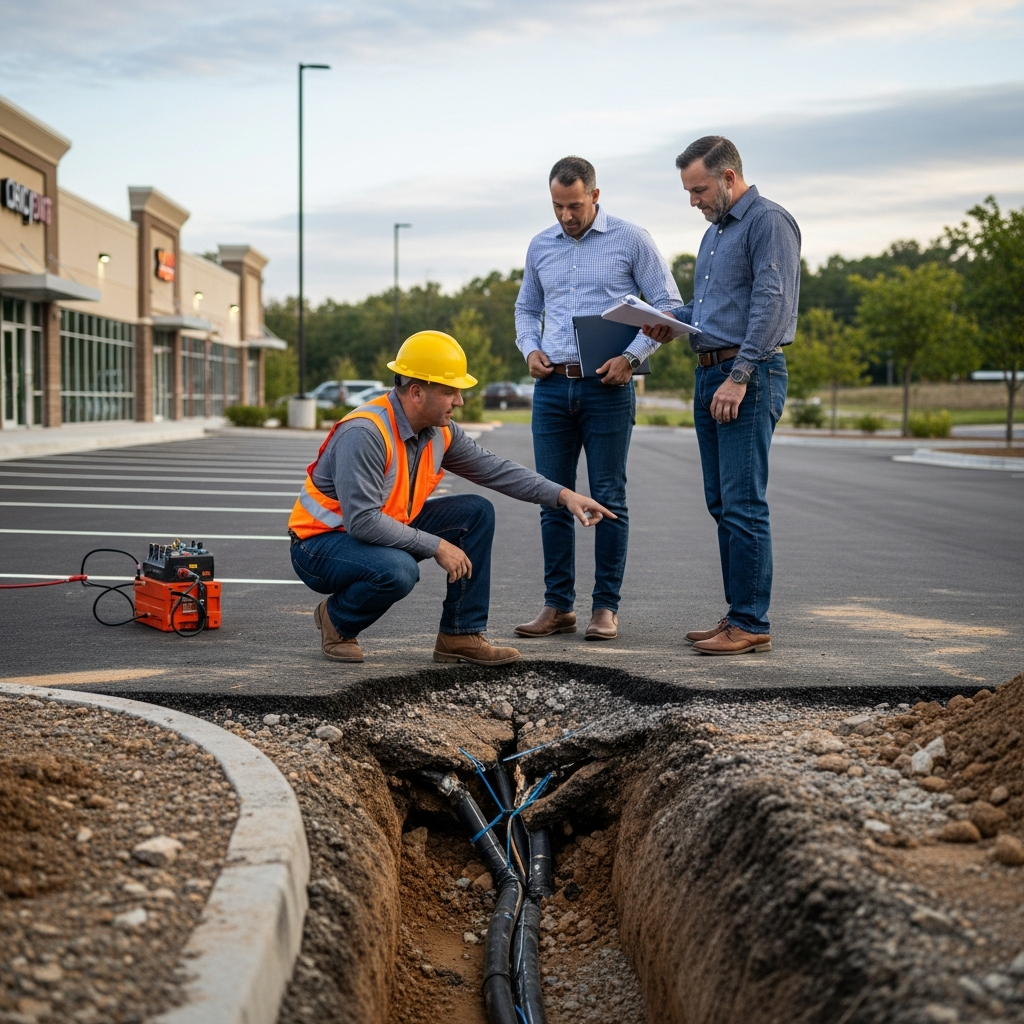
A property manager called last spring. A parking lot expansion had shifted enough soil to stress a feeder line buried since the late 90s. Nobody had touched it. Nobody needed to. Once the ground moved, the conduit took the hit, and part of the building started seeing voltage drops nobody could explain at first.
The issue raised in power-grid-model 1.13.37, “The Buried Feed Hadn’t Been Touched — Until the Ground Shifted” is simple: aging buried infrastructure doesn’t show its problems until something forces it to. For commercial properties, that pressure usually comes from new construction nearby, heavier loads or shifting soil after heavy rain.
That’s where underground utility work gets misunderstood. People assume buried means safe. But conduit pathways, splice points and feeder routing all matter once the property changes around them. Proper trenching depth, separation from other utilities and the right conduit material decide how that feed holds up twenty years later.
If your site is planning a buildout, parking expansion or any new construction phase, the underground work needs to be mapped before anything else moves. And if a feed already failed, an emergency repair is just the start. The real fix is figuring out why the ground won the fight in the first place.
Don’t wait for the soil to vote.
steelcityelectricfl.com/underground electrical