A maintenance tech walks the back lot at 9 p.m. and notices the pole light near the loading dock is out again. Not flickering. Just gone. The sign at the main entrance is half lit too, which it wasn’t last week. Somewhere under the asphalt, something is starting to give up, and nobody on site knows exactly where the run goes.
Buried lines have a way of failing without warning. No flicker, no hum. Just a section of parking lot going dark, or a sign cutting out on the wrong side of the building, and suddenly the crew is pulling up old site plans trying to remember where the conduit even runs.
The issue raised in abc.net.au, “Australia expected to create more solar panel waste by 2030” is simple. Aging infrastructure piles up faster than anyone budgets for. For commercial properties down here, the same logic hits underground feeders that were dropped in twenty or thirty years ago and quietly forgotten.
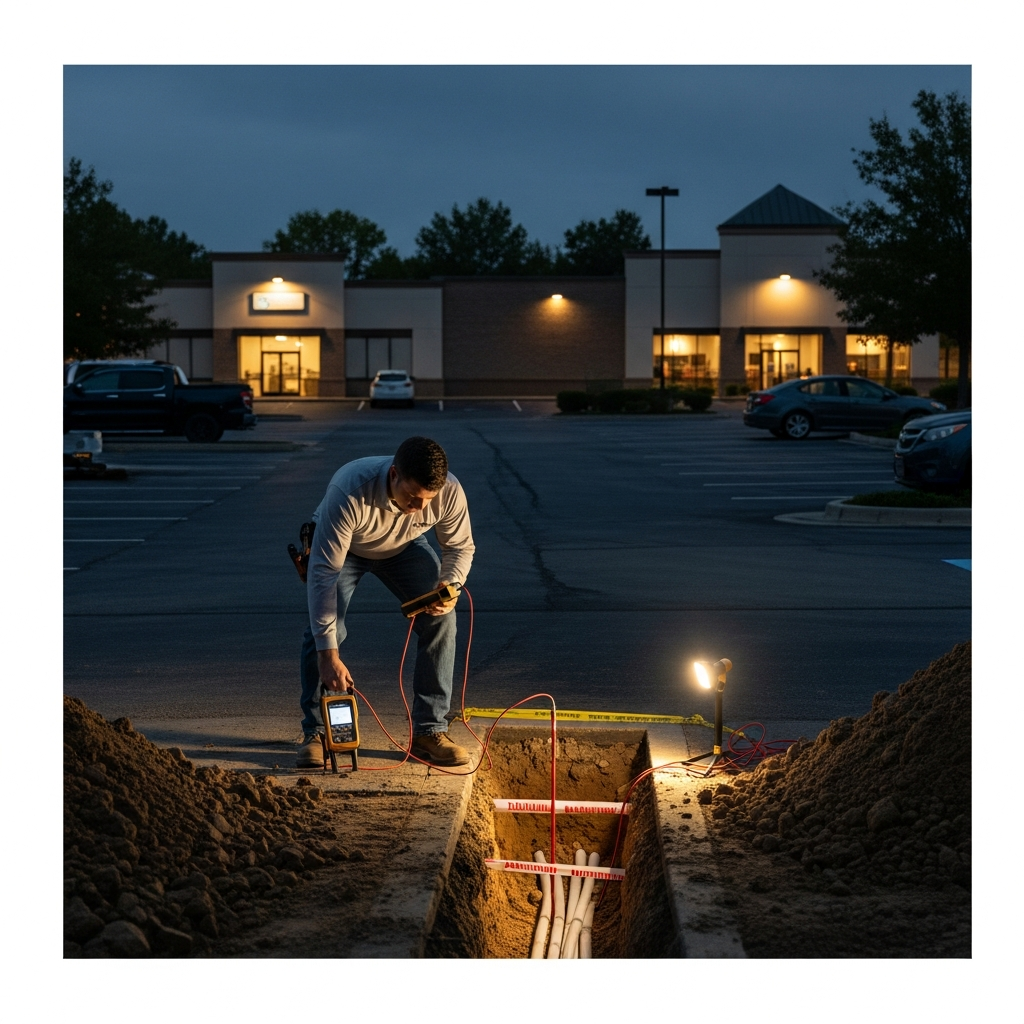
That’s the part most owners don’t think about until trenching crews are already on site. Direct-buried cable, shallow conduit, no warning tape, no as-builts. Honestly, I’d rather quote a full underground utility installation done correctly than chase a phantom fault under three inches of asphalt for two days. It’s cheaper in the end. It’s safer. And it actually ends.
If your property is expanding, adding a new load or tying in a second building, plan the underground work before the concrete goes down. Pothole the existing runs. Map the conduit. Put new feeders in proper PVC with tracer wire and warning tape. The lines you bury today are the ones someone has to find later, and they will not always have the drawings to do it.
steelcityelectricfl.com/underground electrical