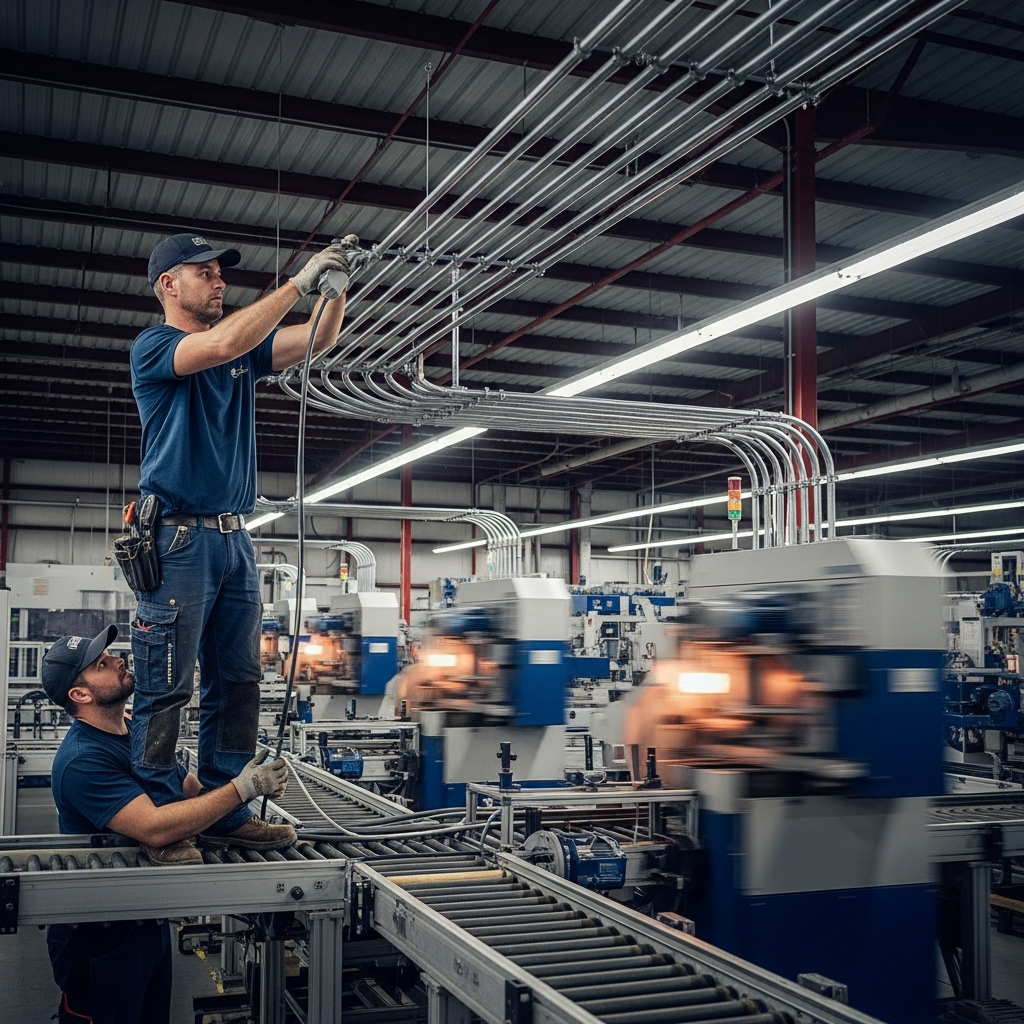
The line never stopped. That was the odd part. Conveyors kept moving, presses cycled through, packaging kept feeding out the back, and the maintenance guy kept pointing at a junction box that felt warmer than it should. By the time we got the call, two feeders were already discolored and a sub-panel feeding the mixers was running near its limit at every shift change.
Recent reporting from Tom’s Hardware, “Tokyo consortium tests placing data centers under railway overpasses — passing trains introduce severe thermal and vibration challenges” points to a bigger shift in how compact, high-load equipment is being squeezed into spaces that were never wired for it. That same pressure is showing up inside Florida production facilities right now.
Honestly, most of the plants we walk into were wired for the equipment that existed when the building first opened. Add a few new industrial electrical installation jobs over the years, swap in higher draw motors, drop in a second compressor, and the original feeder layout is doing work it was never sized for. It holds. Until it doesn’t.
What we usually recommend is a real load study before adding another machine. Map the runs, check the conduit fill, look at how the production zones are actually grouped. Cheaper than rebuilding a scorched feeder on a Saturday with the line down. Every time.
steelcityelectricfl.com/industrial electrical