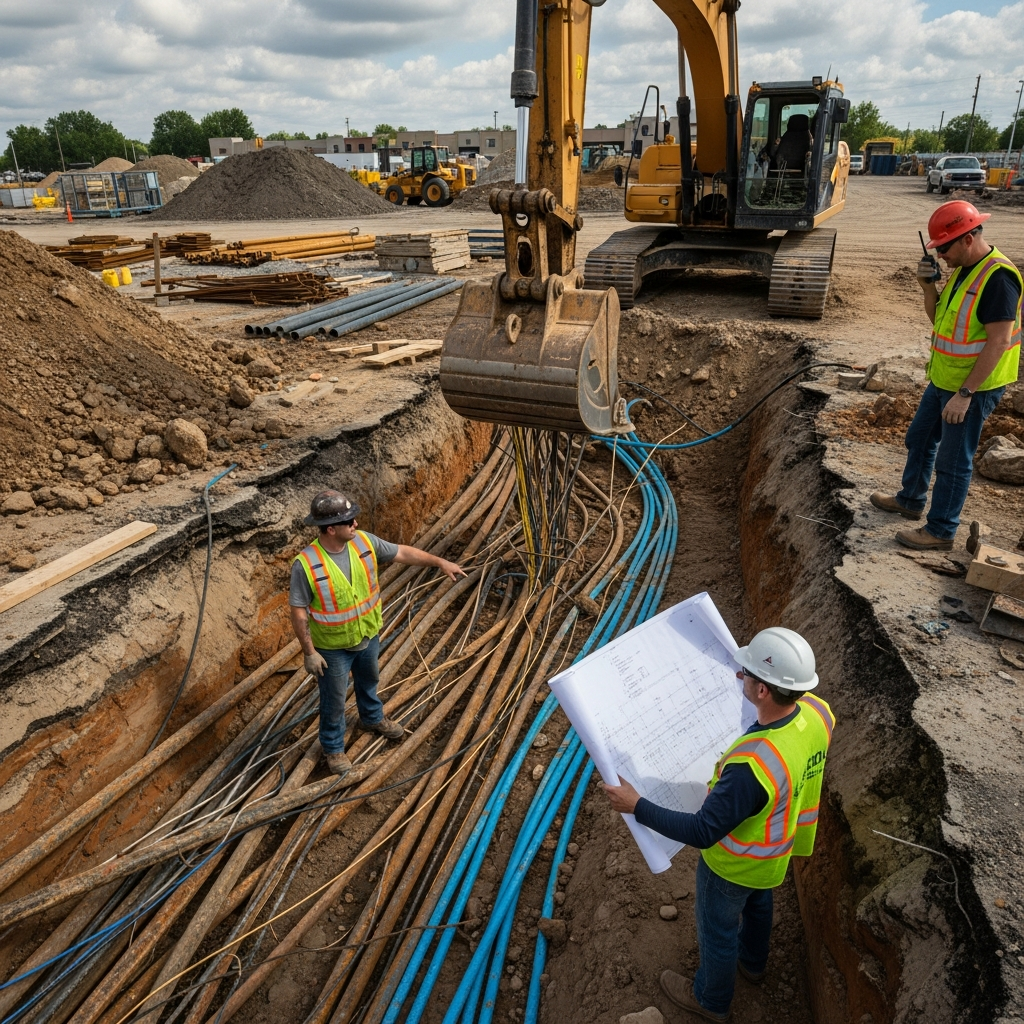
A property manager called last week about a small remodel at a strip center off the main road. The crew had only been digging for about twenty minutes. Then the bucket caught a conduit nobody knew was there, and the lights in two neighboring units flickered hard enough to reset a few registers.
That’s the moment the day changes. The excavator hits something it shouldn’t, work stops, and suddenly nobody can produce paperwork showing what’s actually down there. Old utility feeds with no record are more common than people think, especially on properties that have been built on, added to and rewired over the decades.
A recent ENR.com, “Aging Underground Infrastructure Continues to Surprise Crews on Commercial Sites” lines up with what many business owners are starting to experience in their own buildings. The strain is real. The documentation gap is bigger than most expect.
When that happens on a job we’re running, the first move is to pause and verify, not guess. Proper underground electrical utility installation means tracing what’s live, what’s abandoned and what’s been re-fed off something else years ago. Honestly, half the headaches I see come from someone assuming an old conduit is dead because it looks dead.
From there, we plan new conduit routes that don’t repeat the same mistakes. Clean trenching, properly bedded conduit, accurate as-builts handed to the owner at closeout. If the project is part of a larger buildout, we coordinate with the new construction team so the service entry and new electrical service tie in cleanly.
The unrecorded feed isn’t the problem. The habit of building on top of it is.
steelcityelectricfl.com/underground electrical