Tokyo’s under-rail data center test signals tougher heat and vibration demands for commercial panel installations and upgrades
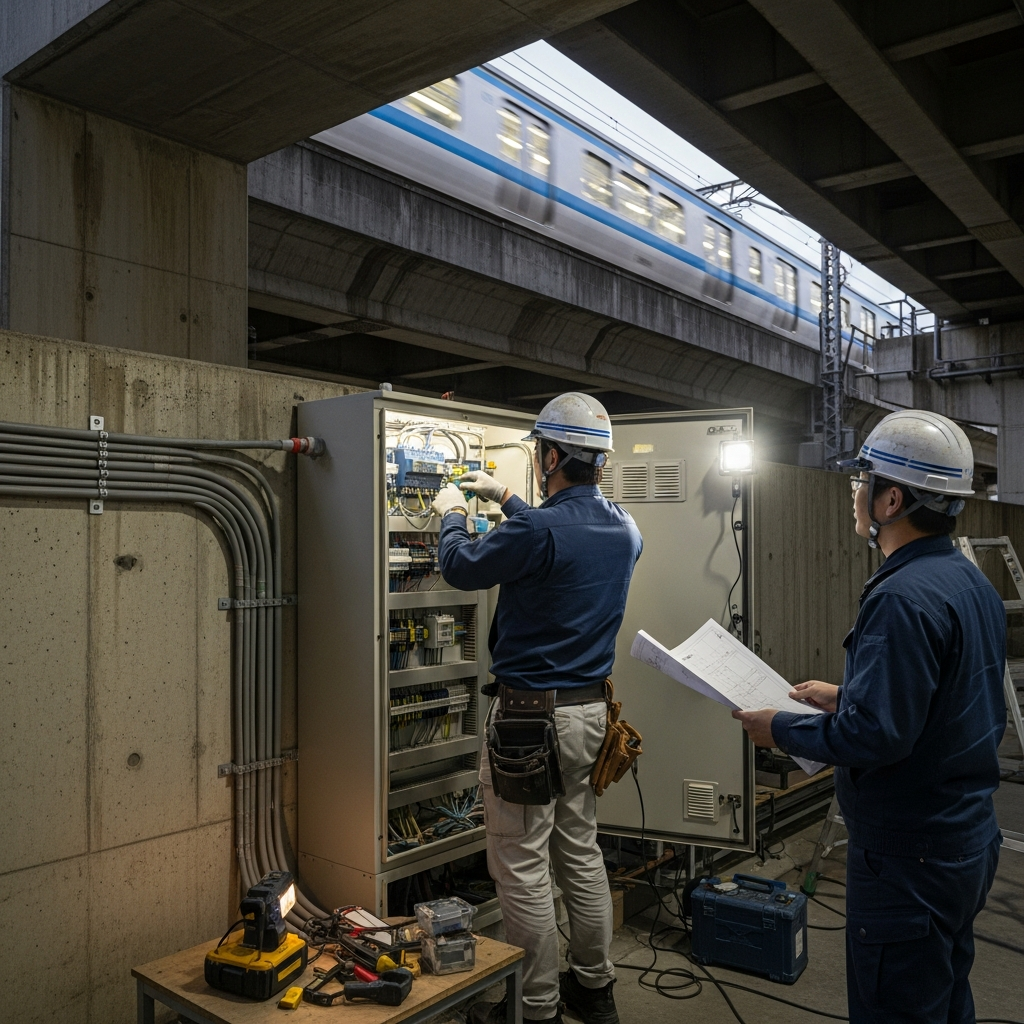
Reuters recently reported on a Tokyo test using modular data center units under railway overpasses. Servers, cooling equipment, and power gear are being packed into container-sized spaces. It is a smart use of dead space, sure. From an electrical field standpoint, though, that is a rough place to put sensitive load. Heat builds. Trains shake the structure. Access is tight. Panel work in that kind of setup cannot be casual.
Commercial panels see enough abuse in normal buildings. Then somebody adds cooling, controls, backup equipment, or another rack of load and expects the old setup to keep carrying it. Sometimes it does for a while. Then breakers start running warm, lugs loosen, labels stop matching the work, and the room that was barely adequate becomes the problem.
That is why commercial electrical panel installation and upgrades have to be looked at as part of the whole building, not just a swap-out. Panel location matters. So does feeder routing, grounding, working clearance, available fault current, heat around the enclosure, and how the owner plans to shut equipment down later. A panel that handled lights and outlets may not be the right panel once mechanical equipment, server load, or battery backup gets added.
The outage plan is where a lot of jobs get real. Owners usually ask about downtime after the gear has already been ordered. Restaurants, medical offices, warehouses, condos, retail spaces, and clubhouses all run differently. Some can shut down early. Some need phased work. Some need temporary power brought in before anything gets touched.
Steel City Electric has dealt with that in occupied buildings. On the emergency power restoration and underground electrical repair at Stoneybrooke Clubside Condominiums in Sarasota, the work involved generators, underground feeder repair, outage recovery, and residents still on site. Jobs like that leave no room for guessing. Power has to come back safely, cleanly, and in the right order.
Heat gets missed more than it should. Add load to old switchgear in a warm electrical room and the trouble may not show up on day one. It shows up during a hot week, after the A/C has been running hard, when a connection that was already weak starts acting up. During commercial electrical service work, we look past the one failed part because the failed part is not always the root cause.
Vibration is another problem that does not care how good the plans looked. Terminations need proper torque. Conduit needs real support. Equipment needs to be mounted like it will live there for years, not just pass inspection. Put a panel near pumps, roof equipment, traffic vibration, or rail activity and small shortcuts turn into heat, buzzing, nuisance trips, or damaged conductors later.
Modular equipment, backup power, EV-related loads, small data rooms, and larger mechanical systems are not going away. More buildings are asking more from electrical rooms that were never built for it. If the panel is crowded, corroded, undersized, or stuck in a bad location, every downstream fix gets harder.
Steel City Electric starts with the service side. What must stay online. What can be shut down. Which feeders are worth keeping. Where temporary power may be needed. That planning keeps a panel upgrade from turning into call-backs and emergency repairs. For facilities with heavier loads or unreliable equipment, the team can also coordinate related commercial electrical repair so new panel work is not being installed over old problems.