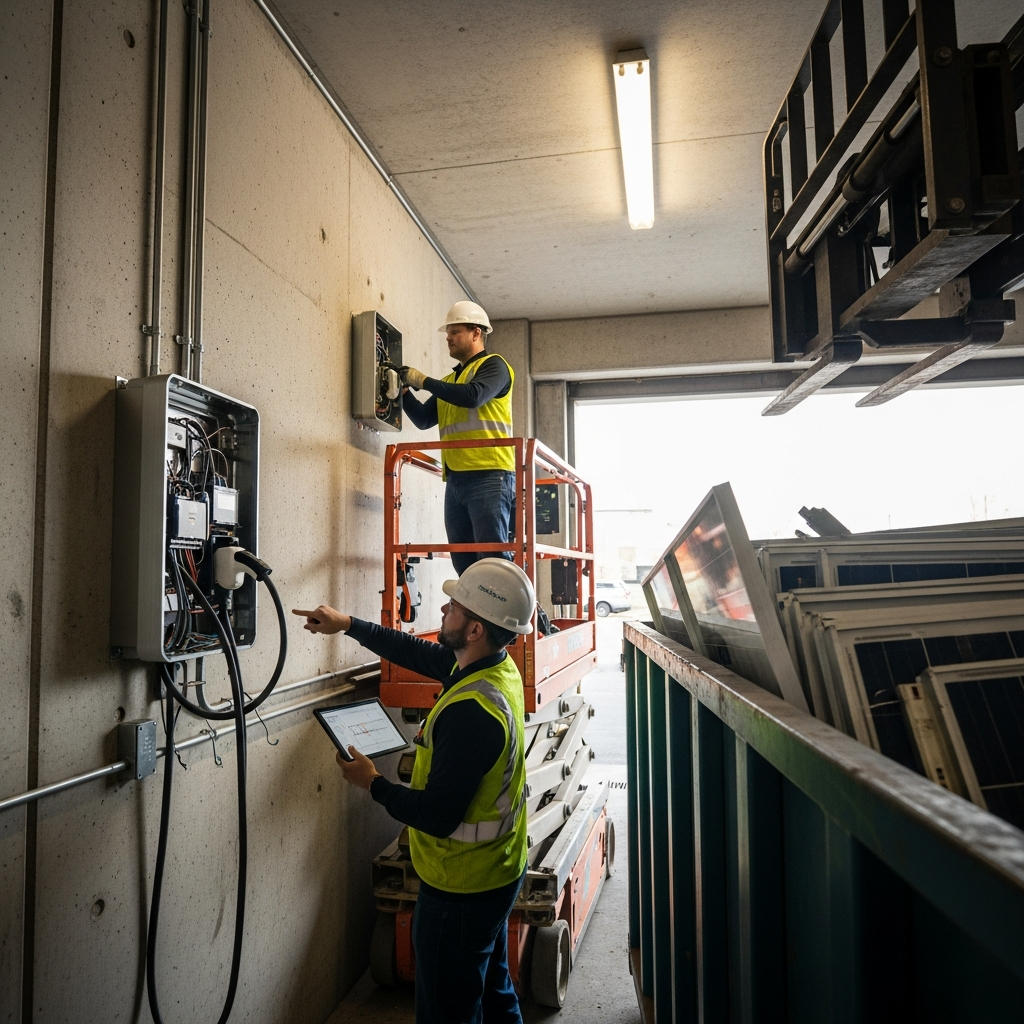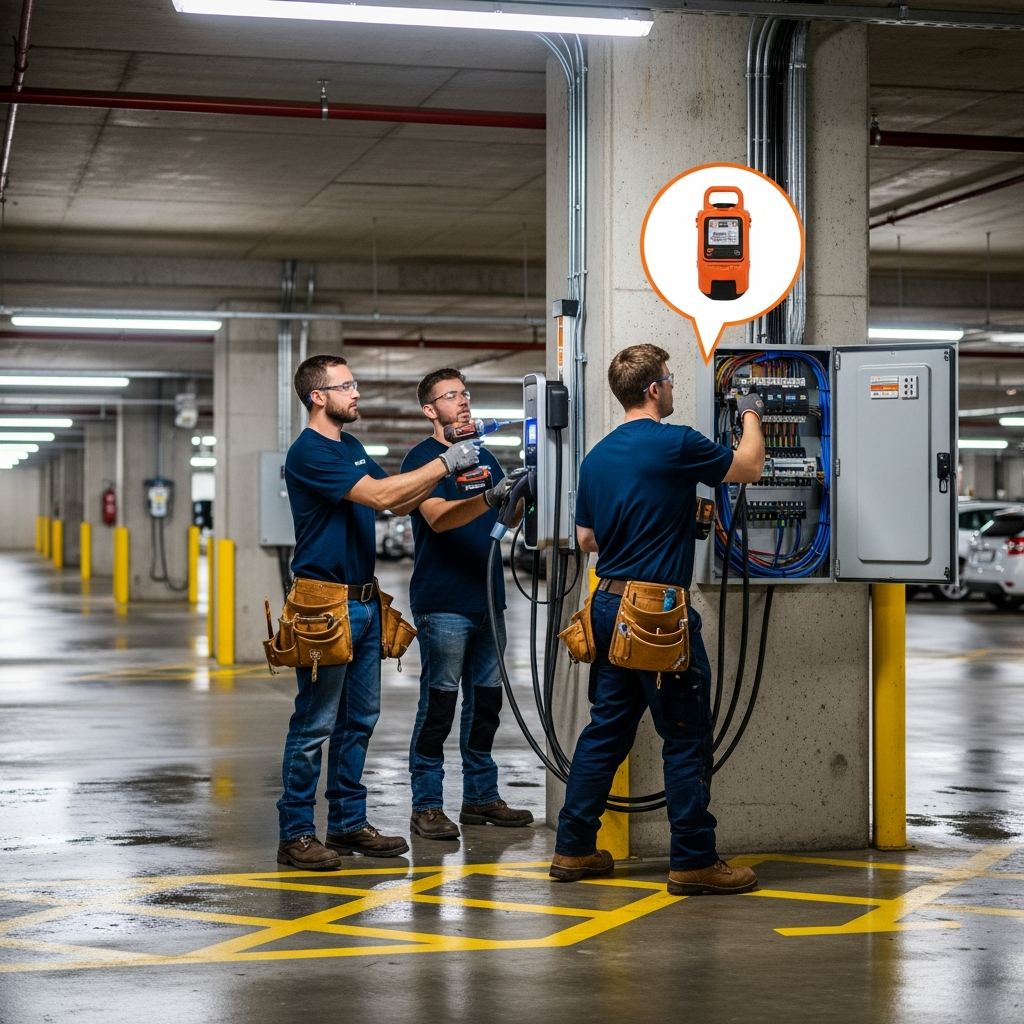
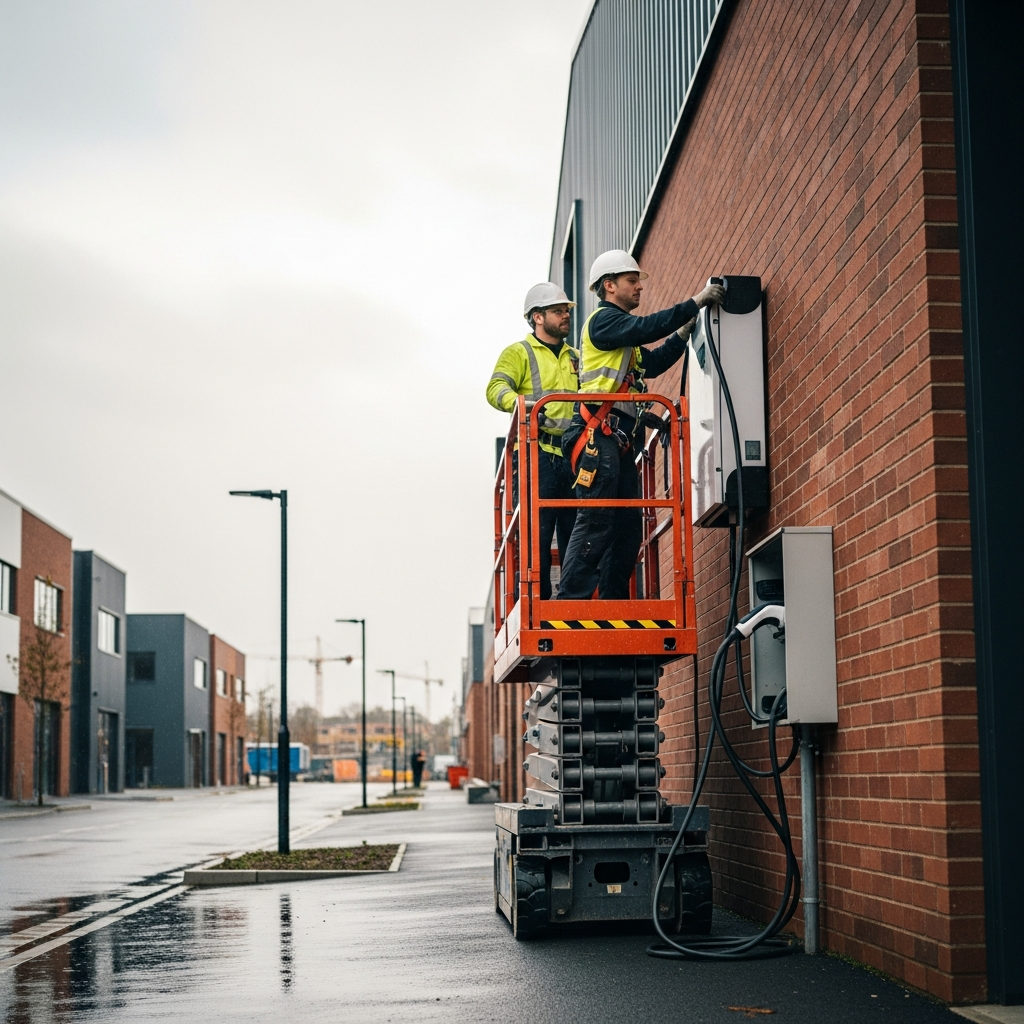
EV chargers do not look like much once they are sitting in the parking lot. Set the pedestal, pull the wire, hang the signs, done. That is how it looks from outside. On the electrical side, it can turn into a different job fast. Service size, spare breaker space, feeder distance, transformer capacity, conduit path, pavement cuts, voltage drop, and the loads already running in the building all have to be checked. Skip that step and the site usually tells on itself. Tripped breakers. Hot gear. Flickering complaints. Tenants calling because something shut off during lunch rush.
That is why commercial EV charger installation needs to start with the building, not the charger catalog. A few Level 2 units at an office, restaurant pad, shopping center, or fleet lot may land right on top of HVAC, refrigeration, lighting, kitchen equipment, and normal plug loads. Some properties have room for it. Plenty do not. Older panels are often packed. Labels are wrong. Somebody added equipment five years ago and never updated the drawings.
The recent power-grid-model update, version 1.13.36 of its Python/C++ library for distribution power system analysis, fits what is happening in the field. More load modeling is showing up because EV demand is not a small afterthought anymore. The old habit of adding equipment and seeing how it behaves is a bad way to find the weak spot. Still, software only goes so far. A contractor still has to open panels, trace what is actually there, look at routing, and compare the paperwork to the real building.
Steel City Electric has run into the same kind of service pressure on tenant buildout work, including Insomnia Cookies in Florida. Retail power and kitchen electrical loads had to be planned around how the space really operates, not just what a nameplate says. EV charging is no different. The numbers matter, but so does the site.
For a commercial property, the question is not only whether the chargers will energize. The question is whether everything else keeps running after they do. A proper load review may lead to a panel change, larger feeder, new disconnects, utility coordination, added distribution gear, or a different charger layout. On active sites, commercial electrical services also have to be phased around business hours so tenants and customers are not caught in the shutdown.
Property owners, managers, and business operators should get the electrical side checked before buying equipment. Steel City Electric can walk the site, review the existing service, look at practical conduit and trench routes, and sort out what the install is likely to require. Start with the load. Then pick the charger.